


- Afhalen na 1 uur in een winkel met voorraad
- Gratis thuislevering in België vanaf € 30
- Ruim aanbod met 7 miljoen producten
- Afhalen na 1 uur in een winkel met voorraad
- Gratis thuislevering in België vanaf € 30
- Ruim aanbod met 7 miljoen producten





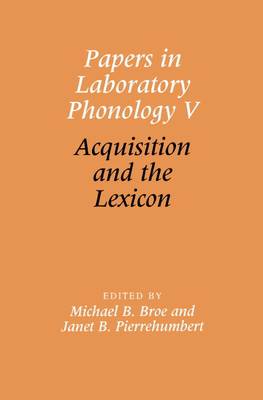
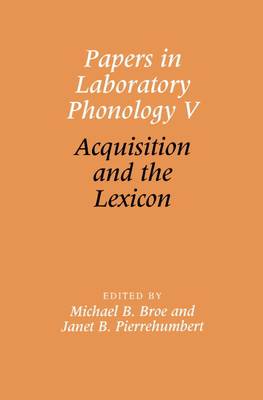
Papers in Laboratory Phonology V
Acquisition and the Lexicon
€ 213,45
+ 426 punten
Omschrijving
The traditional focus of the Papers in Laboratory Phonology series has been on the relationship of phonology to phonetics. The present volume expands this domain in setting two new themes: language acquisition and lexical representation. Contributors tackle the central problem of what constitutes a possible word in generative phonology, employing contemporary approaches such as Optimality Theory, connectionism, and stochastic grammars. Several papers integrate the issues of lexical representation and language acquisition by undertaking to explain the organization of the adult phonological system as the end product of the acquisition process. Others explore the role of sequential frequency in the lexicon and the development of fine temporal control in production in the emergence of phonological segments and features. Papers in Laboratory Phonology V: Acquisition and the Lexicon will thus be of interest to a wide range of researchers in phonetics, phonology, psycholinguistics, cognitive science, and the study of speech and communication disorders.
Specificaties
Betrokkenen
- Uitgeverij:
Inhoud
- Aantal bladzijden:
- 416
- Taal:
- Engels
- Reeks:
Eigenschappen
- Productcode (EAN):
- 9780521643634
- Verschijningsdatum:
- 13/04/2000
- Uitvoering:
- Hardcover
- Formaat:
- Genaaid
- Afmetingen:
- 156 mm x 236 mm
- Gewicht:
- 802 g

Alleen bij Standaard Boekhandel
+ 426 punten op je klantenkaart van Standaard Boekhandel
AANGERADEN


Beoordelingen
We publiceren alleen reviews die voldoen aan de voorwaarden voor reviews. Bekijk onze voorwaarden voor reviews.