


- Afhalen na 1 uur in een winkel met voorraad
- Gratis thuislevering in België vanaf € 30
- Ruim aanbod met 7 miljoen producten
- Afhalen na 1 uur in een winkel met voorraad
- Gratis thuislevering in België vanaf € 30
- Ruim aanbod met 7 miljoen producten





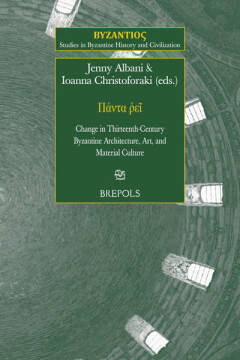
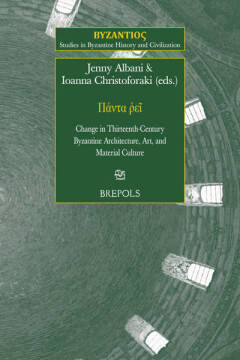
Panta Pei
Change in Thirteenth-Century Byzantine Architecture, Art, and Material Culture
Jenny P. Albani
€ 95,40
+ 190 punten
Omschrijving
The year 1204, when Byzantium was conquered by the participants of the Fourth Crusade, marks a major and violent change on several levels, including politics and the economy, society and religion, as well as art and culture. The once powerful empire experienced both the humiliation of foreign occupation and its political subjugation. After its re-establishment in 1261, Byzantium had become a shrunken state, surrounded by aggressive enemies, while a number of its vital areas, such as Crete and Cyprus, together with the Aegean and Ionian islands, remained under foreign rule. These changes influenced not only the artistic output but the everyday life of the Byzantines as well. New ideas, new preferences, and new techniques are attested in architecture, painting, sculpture, and minor arts, all of which developed a new dynamic. According to the Greek philosopher Heraclitus of Ephesus (c. 535 - c. 475 B.C.), whose aphorism Πάντα ῥεῖ, i.e. everything flows, is highlighted in the title of this collective volume, change is the fundamental essence of the universe. The book aims to provide an up-to-date, well-rounded, and balanced overview of the long thirteenth century, by examining aspects of the artistic and cultural transformations created and developed within the new framework of co-existence among Byzantines, Latins, Slavs, and Ottomans.
Specificaties
Betrokkenen
- Auteur(s):
- Uitgeverij:
Inhoud
- Aantal bladzijden:
- 449
- Taal:
- Engels
- Reeks:
- Reeksnummer:
- nr. 20
Eigenschappen
- Productcode (EAN):
- 9782503602684
- Verschijningsdatum:
- 31/03/2023
- Uitvoering:
- Paperback
- Formaat:
- Trade paperback (VS)
- Afmetingen:
- 157 mm x 244 mm
- Gewicht:
- 839 g


Alleen bij Standaard Boekhandel
+ 190 punten op je klantenkaart van Standaard Boekhandel
Cadeau

AANGERADEN


Beoordelingen
We publiceren alleen reviews die voldoen aan de voorwaarden voor reviews. Bekijk onze voorwaarden voor reviews.