



Je cadeautjes zeker op tijd in huis hebben voor de feestdagen? Kom langs in onze winkels en vind het perfecte geschenk!
- Afhalen na 1 uur in een winkel met voorraad
- Gratis thuislevering in België vanaf € 30
- Ruim aanbod met 7 miljoen producten
Je cadeautjes zeker op tijd in huis hebben voor de feestdagen? Kom langs in onze winkels en vind het perfecte geschenk!
- Afhalen na 1 uur in een winkel met voorraad
- Gratis thuislevering in België vanaf € 30
- Ruim aanbod met 7 miljoen producten





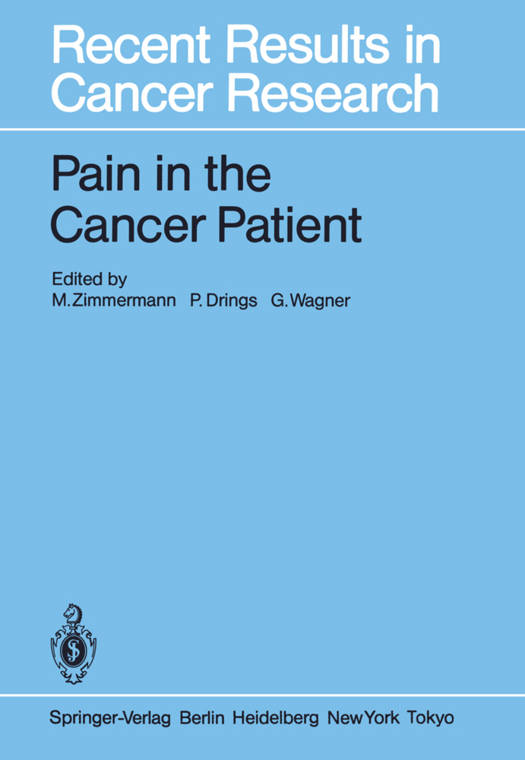
Pain in the Cancer Patient
Pathogenesis, Diagnosis and Therapy
€ 168,45
+ 336 punten
Omschrijving
Pain is unfortunately not an early symptom in neoplastic diseases. When it occurs, however, as it so often does in the advanced stages of the disease, then it can be particularly severe. Many physicians are not able to treat such pain efficiently with the standard methods familiar to them. Even in the oncological clinic, it is common for cancer patients not to receive adequate treatment of their pain; the therapeutic efforts are directed principally at the cancer, the pain often being neglected. This book fills a gap in the literature and should enhance the awareness of pain of all those who deal with cancer patients. For the patient, the symptoms of the disease are usually the direct cause of suffering, and pain is often the most severe symptom. The pain may be potentiated by knowledge of the threat posed by the cancer, or may itself considerably increase the patients existing anxiety. Thus there is a vicious circle of pain and psychological factors which will reduce the patient to a state of despair and distress. It is, therefore, obvious that efficient pain therapy is of utmost signi- ficance to the patient, who will judge the doctor's ability to provide medical assistance according to the degree of pain relief achieved. The patient's quality of life will also depend critically on the relief obtained.
Specificaties
Betrokkenen
- Uitgeverij:
Inhoud
- Aantal bladzijden:
- 240
- Taal:
- Engels
- Reeks:
- Reeksnummer:
- nr. 89
Eigenschappen
- Productcode (EAN):
- 9783642820304
- Verschijningsdatum:
- 14/12/2011
- Uitvoering:
- Paperback
- Formaat:
- Trade paperback (VS)
- Afmetingen:
- 170 mm x 244 mm
- Gewicht:
- 412 g

Alleen bij Standaard Boekhandel
+ 336 punten op je klantenkaart van Standaard Boekhandel
CADEAU


Beoordelingen
We publiceren alleen reviews die voldoen aan de voorwaarden voor reviews. Bekijk onze voorwaarden voor reviews.