


- Afhalen na 1 uur in een winkel met voorraad
- Gratis thuislevering in België vanaf € 30
- Ruim aanbod met 7 miljoen producten
- Afhalen na 1 uur in een winkel met voorraad
- Gratis thuislevering in België vanaf € 30
- Ruim aanbod met 7 miljoen producten





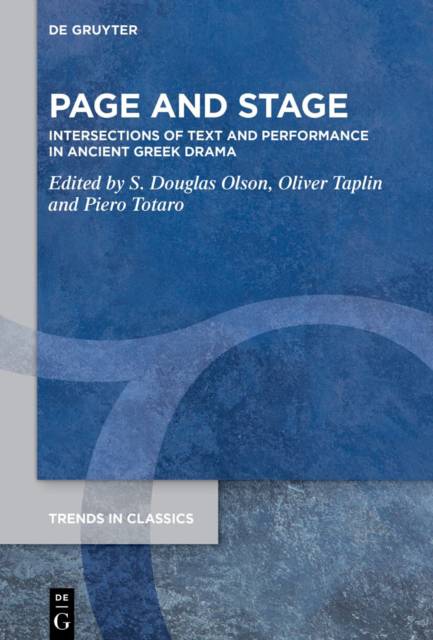
Page and Stage
Intersections of Text and Performance in Ancient Greek Drama
€ 15,95
+ 31 punten
Omschrijving
Our knowledge of the ancient theatre is limited by the textual and iconographic character of the evidence available to us: we cannot watch or otherwise experience an Athenian tragedy or comedy. These essays, by a distinguished group of international scholars, bridge the gap between the surviving literary and iconographic evidence and the realities of performance on the ancient Greek stage. This ambitious goal is reached by means of a detailed examination of several case-studies: the construction of dramatic space in Sophocles' Antigone; the significance of the use of deictic pronouns in Sophocles' Trachiniae; the theatrical and religious dynamics of the appearance of divine figures on stage; the relationship between the victory celebrations at the end of Aristophanic comedies and their counterparts in the after-performance real world; the investigation of nude or semi-nude female characters in Aristophanes; the staging of Clouds and the opening scene of Acharnians; the meditation on the metapoetics of the use of props in 5th-century comedy; the relationship between performance context and text through a close reading of a number of Aristophanic fragments; the way the scholia vetera on Frogs imagine and use questions of staging practice; and the potential Aeschylean authorship of some of stage-direction traceable in Aeschylus' Eumenides and Diktoulkoi.
Specificaties
Betrokkenen
- Uitgeverij:
Inhoud
- Aantal bladzijden:
- 193
- Taal:
- Engels
- Reeks:
- Reeksnummer:
- nr. 146
Eigenschappen
- Productcode (EAN):
- 9783112215371
- Verschijningsdatum:
- 30/06/2025
- Uitvoering:
- Paperback
- Formaat:
- Trade paperback (VS)
- Afmetingen:
- 156 mm x 234 mm
- Gewicht:
- 281 g

Alleen bij Standaard Boekhandel
+ 31 punten op je klantenkaart van Standaard Boekhandel
Cadeau

AANGERADEN


Beoordelingen
We publiceren alleen reviews die voldoen aan de voorwaarden voor reviews. Bekijk onze voorwaarden voor reviews.