


- Afhalen na 1 uur in een winkel met voorraad
- Gratis thuislevering in België vanaf € 30
- Ruim aanbod met 7 miljoen producten
- Afhalen na 1 uur in een winkel met voorraad
- Gratis thuislevering in België vanaf € 30
- Ruim aanbod met 7 miljoen producten





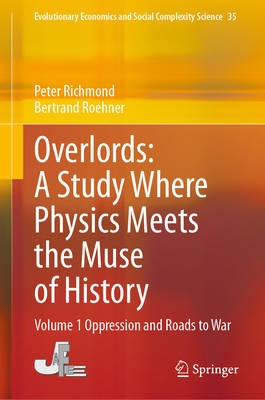
Overlords: A Study Where Physics Meets the Muse of History
Volume 1 Oppression and Roads to War
Peter Richmond, Bertrand Roehner
€ 213,95
+ 427 punten
Omschrijving
This book examines the driving forces that lead to civil wars and revolutions. The authors' approach differs from the familiar historical narrative, as they differentiate between "causes" or 'actions of great men' and "mechanisms" that arise from social activity and behaviour. The latter include early-stage conflicts or outbreaks of violence which, if not checked, can lead to social division and more violent incidents. The approach rooted in methods used in physical experimentation is illustrated in part one using the Fire of London and American war of Independence. Part two examines narratives for uprisings in a range of occupied countries across both the world. Part three implements the approach developed in part one on a broad basis to explore common features of invasions and conflict. A separate chapter looks at the lifetime of political empires and explores why religious empires have much greater longevity. The scientific methods lead to the possibility of prediction and some observations are made of current events in the middle east and Ukraine.
Specificaties
Betrokkenen
- Auteur(s):
- Uitgeverij:
Inhoud
- Aantal bladzijden:
- 290
- Taal:
- Engels
- Reeks:
- Reeksnummer:
- nr. 35
Eigenschappen
- Productcode (EAN):
- 9789819562671
- Verschijningsdatum:
- 10/04/2026
- Uitvoering:
- Hardcover
- Formaat:
- Genaaid
- Afmetingen:
- 155 mm x 235 mm


Alleen bij Standaard Boekhandel
+ 427 punten op je klantenkaart van Standaard Boekhandel
Cadeau

AANGERADEN


Beoordelingen
We publiceren alleen reviews die voldoen aan de voorwaarden voor reviews. Bekijk onze voorwaarden voor reviews.