


- Afhalen na 1 uur in een winkel met voorraad
- Gratis thuislevering in België vanaf € 30
- Ruim aanbod met 7 miljoen producten
- Afhalen na 1 uur in een winkel met voorraad
- Gratis thuislevering in België vanaf € 30
- Ruim aanbod met 7 miljoen producten





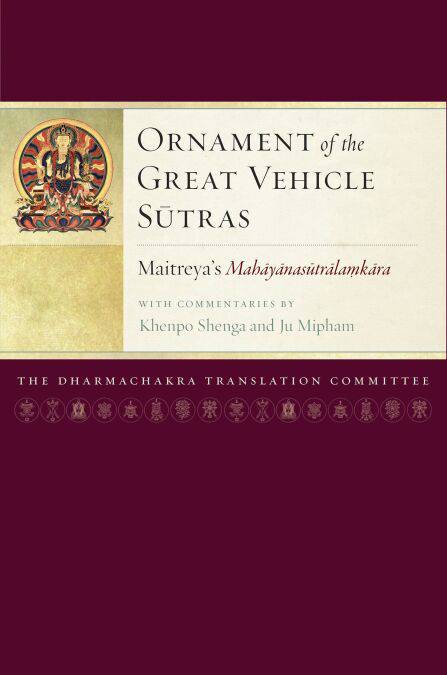
Ornament of the Great Vehicle Sutras E-BOOK
Maitreya's Mahayanasutralamkara with Commentaries by Khenpo Shenga and Ju Mipham
Maitreya
€ 68,01
+ 68 punten
Omschrijving
The Buddhist masterpiece Ornament of the Great Vehicle Sūtras, often referred to by its Sanskrit title, Mahāyānasūtrālaṃkāra, is part of a collection known as the Five Maitreya Teachings, a set of philosophical works that have become classics of the Indian Buddhist tradition. Maitreya, the Buddha’s regent, is held to have entrusted these profound and vast instructions to the master Asaṅga in the heavenly realm of Tuṣita.
The Ornament provides a comprehensive description of the bodhisattva’s view, meditation, and enlightened activities. Bodhisattvas are beings who, out of vast love for all sentient beings, have dedicated themselves to the task of becoming fully awakened buddhas, capable of helping all beings in innumerable and vast ways to become enlightened themselves. To fully awaken requires practicing great generosity, patience, energy, discipline, concentration, and wisdom, and Maitreya’s text explains what these enlightened qualities are and how to develop them. This volume includes commentaries by Khenpo Shenga and Ju Mipham, whose discussions illuminate the subtleties of the root text and provide valuable insight into how to practice the way of the bodhisattva. Drawing on the Indian masters Vasubandhu and, in particular, Sthiramati, Mipham explains the Ornament with eloquence and brilliant clarity. This commentary is among his most treasured works.
The Ornament provides a comprehensive description of the bodhisattva’s view, meditation, and enlightened activities. Bodhisattvas are beings who, out of vast love for all sentient beings, have dedicated themselves to the task of becoming fully awakened buddhas, capable of helping all beings in innumerable and vast ways to become enlightened themselves. To fully awaken requires practicing great generosity, patience, energy, discipline, concentration, and wisdom, and Maitreya’s text explains what these enlightened qualities are and how to develop them. This volume includes commentaries by Khenpo Shenga and Ju Mipham, whose discussions illuminate the subtleties of the root text and provide valuable insight into how to practice the way of the bodhisattva. Drawing on the Indian masters Vasubandhu and, in particular, Sthiramati, Mipham explains the Ornament with eloquence and brilliant clarity. This commentary is among his most treasured works.
Specificaties
Betrokkenen
- Auteur(s):
- Vertaler(s):
- Uitgeverij:
Inhoud
- Aantal bladzijden:
- 1040
- Taal:
- Engels
- Reeks:
Eigenschappen
- Productcode (EAN):
- 9780834800113
- Verschijningsdatum:
- 10/11/2014
- Uitvoering:
- E-book
- Beveiligd met:
- Adobe DRM
- Formaat:
- ePub


Alleen bij Standaard Boekhandel
+ 68 punten op je klantenkaart van Standaard Boekhandel
CADEAU

AANGERADEN


Beoordelingen
We publiceren alleen reviews die voldoen aan de voorwaarden voor reviews. Bekijk onze voorwaarden voor reviews.