



Je cadeautjes zeker op tijd in huis hebben voor de feestdagen? Kom langs in onze winkels en vind het perfecte geschenk!
- Afhalen na 1 uur in een winkel met voorraad
- Gratis thuislevering in België vanaf € 30
- Ruim aanbod met 7 miljoen producten
Je cadeautjes zeker op tijd in huis hebben voor de feestdagen? Kom langs in onze winkels en vind het perfecte geschenk!
- Afhalen na 1 uur in een winkel met voorraad
- Gratis thuislevering in België vanaf € 30
- Ruim aanbod met 7 miljoen producten





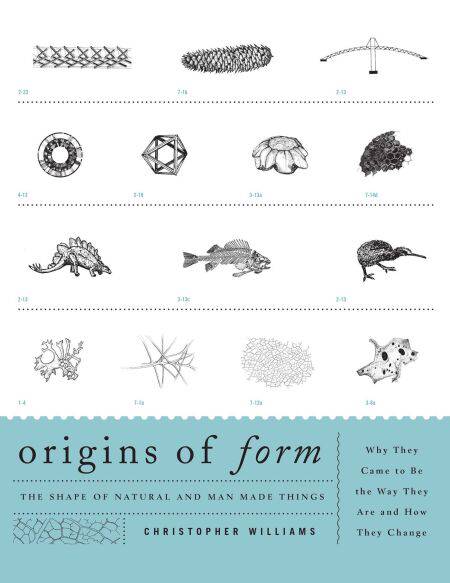
Origins of Form E-BOOK
The Shape of Natural and Man-made Things—Why They Came to Be the Way They Are and How They Change
Christopher Williams
E-book | Engels
€ 11,17
+ 11 punten
Uitvoering
Omschrijving
Origins of Form is about the shape of things. What limits the height of a tree? Why is a large ship or office building more efficient than a small one? What is the similarity between a human rib cage and an airplane or a bison and a cantilevered bridge? How might we plan for things to improve as they are used instead of wearing out? The author has chosen eight criteria that constitute the major influences on three-dimensional form. These criteria comprise the eight chapters of the book: each looks at form from entirely different viewpoints. The products of both nature and man are examined and compared.
This book will make readers—especially those who design and build—aware of their physical environment and how to break away from previously held assumptions and indifference about the ways forms in our human environment have evolved. It shows better ways to do things. The author’s practical, no-nonsense approach and his exquisite drawings, done especially for this volume, provide a clear understanding of what can and cannot be; how big or small an object should be, of what material it will be made, how its function will relate to its design, how its use will change it, and what laws will influence its development.
The facts and information were gathered from many sources: the areas of mechanics, structure, and materials; geology, biology, anthropology, paleobiology, morphology and others. These are standard facts in these areas of specialization, but they are also essential to the designer’s overall knowledge and understanding of form. The result is an invaluable work for students, designers, architects, and planners, and an informed introduction to a fascinating subject for laymen.
This book will make readers—especially those who design and build—aware of their physical environment and how to break away from previously held assumptions and indifference about the ways forms in our human environment have evolved. It shows better ways to do things. The author’s practical, no-nonsense approach and his exquisite drawings, done especially for this volume, provide a clear understanding of what can and cannot be; how big or small an object should be, of what material it will be made, how its function will relate to its design, how its use will change it, and what laws will influence its development.
The facts and information were gathered from many sources: the areas of mechanics, structure, and materials; geology, biology, anthropology, paleobiology, morphology and others. These are standard facts in these areas of specialization, but they are also essential to the designer’s overall knowledge and understanding of form. The result is an invaluable work for students, designers, architects, and planners, and an informed introduction to a fascinating subject for laymen.
Specificaties
Betrokkenen
- Auteur(s):
- Uitgeverij:
Inhoud
- Aantal bladzijden:
- 144
- Taal:
- Engels
Eigenschappen
- Productcode (EAN):
- 9781589799363
- Verschijningsdatum:
- 9/05/2013
- Uitvoering:
- E-book
- Beveiligd met:
- Adobe DRM
- Formaat:
- ePub


Alleen bij Standaard Boekhandel
+ 11 punten op je klantenkaart van Standaard Boekhandel
CADEAU


Beoordelingen
We publiceren alleen reviews die voldoen aan de voorwaarden voor reviews. Bekijk onze voorwaarden voor reviews.