



Je cadeautjes zeker op tijd in huis hebben voor de feestdagen? Kom langs in onze winkels en vind het perfecte geschenk!
- Afhalen na 1 uur in een winkel met voorraad
- Gratis thuislevering in België vanaf € 30
- Ruim aanbod met 7 miljoen producten
Je cadeautjes zeker op tijd in huis hebben voor de feestdagen? Kom langs in onze winkels en vind het perfecte geschenk!
- Afhalen na 1 uur in een winkel met voorraad
- Gratis thuislevering in België vanaf € 30
- Ruim aanbod met 7 miljoen producten





€ 127,45
+ 254 punten
Omschrijving
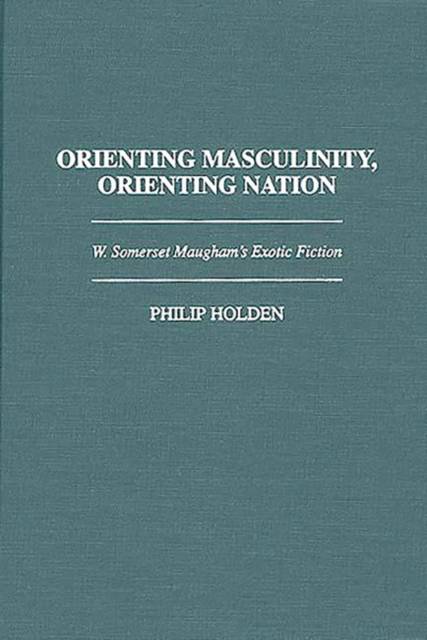
Although their settings span a wide geographical area, from the South Pacific to India, Maugham's exotic short stories, novels, and travelogues all, ultimately, focus on the creation of a masculine British identity. In this first book to address Maugham's fiction in light of recent developments in postcolonial, gender, and cultural theory, Holden argues that Maugham's work can be understood as an attempt to negotiate between two alternative masculine identities: those of private homosexual and public writer. Holden identifies Maugham's attempts to cultivate a public persona as a writer whose heterosexuality is confirmed through a process of control of language. Furthermore, Holden illuminates the fluidity of language that Maugham, in contrast to his public persona, associated with homosexuality. The basis of this study is the provocative notion that Maugham's texts, despite their exotic locations, ultimately dramatize a struggle over masculine British identity.
Specificaties
Betrokkenen
- Auteur(s):
- Uitgeverij:
Inhoud
- Aantal bladzijden:
- 176
- Taal:
- Engels
- Reeks:
- Reeksnummer:
- nr. 68
Eigenschappen
- Productcode (EAN):
- 9780313298127
- Verschijningsdatum:
- 30/07/1996
- Uitvoering:
- Hardcover
- Formaat:
- Genaaid
- Afmetingen:
- 155 mm x 242 mm
- Gewicht:
- 453 g



Alleen bij Standaard Boekhandel
+ 254 punten op je klantenkaart van Standaard Boekhandel
CADEAU


Beoordelingen
We publiceren alleen reviews die voldoen aan de voorwaarden voor reviews. Bekijk onze voorwaarden voor reviews.