


- Afhalen na 1 uur in een winkel met voorraad
- Gratis thuislevering in België vanaf € 30
- Ruim aanbod met 7 miljoen producten
- Afhalen na 1 uur in een winkel met voorraad
- Gratis thuislevering in België vanaf € 30
- Ruim aanbod met 7 miljoen producten





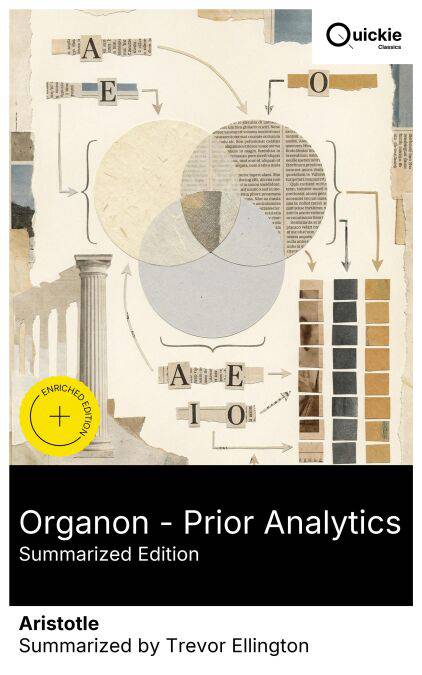
Organon — Prior Analytics (Summarized Edition) E-BOOK
Enriched edition. Foundations of deductive reasoning and syllogistic analysis in ancient philosophy and the study of language and logic
Aristotle
E-book | Engels
€ 1,99
+ 1 punten
Omschrijving
Prior Analytics, the cornerstone of the Organon, offers the earliest systematic theory of deductive inference. In lapidary, schematic prose, Aristotle defines terms, classifies propositions (A, E, I, O), and demonstrates how syllogisms yield necessity from a middle term across three figures and many moods, with reductions to first-figure 'perfect' forms. He develops conversion rules, proofs by ecthesis and reductio, and ventures a demanding theory of modal syllogisms. Situated within the Organon, in dialogue with Topics and Posterior Analytics, the treatise frames dialectical practice while underwriting scientific demonstration; its method became the lingua franca of reasoning through late antiquity and the medieval schools. Aristotle, trained in Plato's Academy and later founder of the Lyceum, conceived logic as organon, the instrument of knowledge. His empirical bent and taxonomic imagination, coupled with disputes against sophists and Academic dialecticians, pressed him to codify inference. Likely distilled from lecture notes, Prior Analytics supplies the formal scaffolding presupposed by his scientific and metaphysical inquiries. Readers in philosophy, classics, and the history of science will find this work indispensable. Use a sound translation with commentary, and read it alongside Topics and Posterior Analytics. Patient study rewards with a lucid map of validity that still instructs modern analysis.
Quickie Classics summarizes timeless works with precision, preserving the author's voice and keeping the prose clear, fast, and readable—distilled, never diluted. Enriched Edition extras: Introduction · Synopsis · Historical Context · Author Biography · Brief Analysis · 4 Reflection Q&As · Editorial Footnotes.
Quickie Classics summarizes timeless works with precision, preserving the author's voice and keeping the prose clear, fast, and readable—distilled, never diluted. Enriched Edition extras: Introduction · Synopsis · Historical Context · Author Biography · Brief Analysis · 4 Reflection Q&As · Editorial Footnotes.
Specificaties
Betrokkenen
- Auteur(s):
- Vertaler(s):
- Uitgeverij:
Inhoud
- Aantal bladzijden:
- 76
- Taal:
- Engels
Eigenschappen
- Productcode (EAN):
- 8596547883036
- Verschijningsdatum:
- 9/01/2026
- Uitvoering:
- E-book
- Beveiligd met:
- Digital watermarking
- Formaat:
- ePub


Alleen bij Standaard Boekhandel
+ 1 punten op je klantenkaart van Standaard Boekhandel
Cadeau

AANGERADEN


Beoordelingen
We publiceren alleen reviews die voldoen aan de voorwaarden voor reviews. Bekijk onze voorwaarden voor reviews.