


- Afhalen na 1 uur in een winkel met voorraad
- Gratis thuislevering in België vanaf € 30
- Ruim aanbod met 7 miljoen producten
- Afhalen na 1 uur in een winkel met voorraad
- Gratis thuislevering in België vanaf € 30
- Ruim aanbod met 7 miljoen producten





€ 337,95
+ 675 punten
Omschrijving
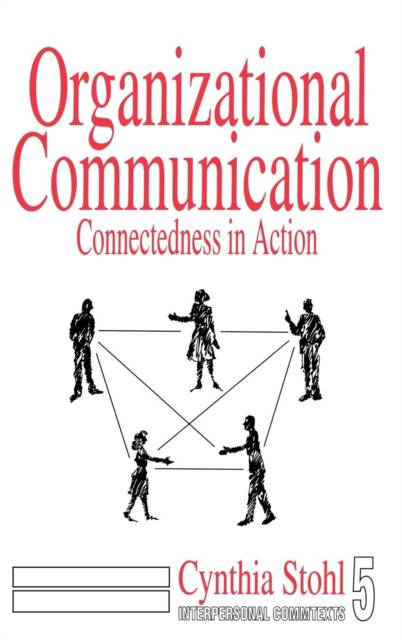
Recipient of the 1995 Best Book Award from the Organizational Communication division of the Speech Communication Association "I have just finished reading Organizational Communication. This is a magnificent piece of work bringing together current and past scholarship to form a persuasive argument for awareness. I will bring this work to the attention of a graduate class I′m teaching on organizational change and team building. . . . Above all, I recommend it to instructors of organizational communication." --William Gorden, Kent State University The lines between our personal and professional lives are blurred--naturally, one affects the other. Organizational Communication is the first book on the subject to take into account the personal context we bring into an organization. In addition to the connections between home life, social life, and professional activities, author Cynthia Stohl asserts that we must pay close attention to the linkages that individuals develop and maintain within their organizational contexts. Each chapter illustrates the ways in which today′s changing social patterns, the increasing diversity of the workforce, the introduction of new communication technologies, and the challenges of global integration and competition create organizational and interpersonal networks that are intricately interwoven and complex. By reframing the network metaphor, the author challenges us to examine the ways in which organizational communication is always embedded in, and influenced by, overlapping systems of relationships. Organizational Communication is the ideal text for courses in organizational communication that focus on the organization as an integrated aspect of our lives, our culture, and our global society.
Specificaties
Betrokkenen
- Auteur(s):
- Uitgeverij:
Inhoud
- Aantal bladzijden:
- 224
- Taal:
- Engels
- Reeks:
- Reeksnummer:
- nr. 5
Eigenschappen
- Productcode (EAN):
- 9780803934252
- Verschijningsdatum:
- 5/04/1995
- Uitvoering:
- Hardcover
- Formaat:
- Ongenaaid / garenloos gebonden
- Afmetingen:
- 154 mm x 227 mm
- Gewicht:
- 371 g


Alleen bij Standaard Boekhandel
+ 675 punten op je klantenkaart van Standaard Boekhandel
Cadeau

AANGERADEN


Beoordelingen
We publiceren alleen reviews die voldoen aan de voorwaarden voor reviews. Bekijk onze voorwaarden voor reviews.