


- Afhalen na 1 uur in een winkel met voorraad
- Gratis thuislevering in België vanaf € 30
- Ruim aanbod met 7 miljoen producten
- Afhalen na 1 uur in een winkel met voorraad
- Gratis thuislevering in België vanaf € 30
- Ruim aanbod met 7 miljoen producten





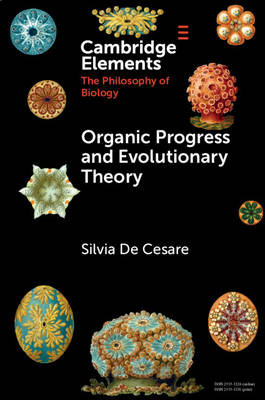
Omschrijving
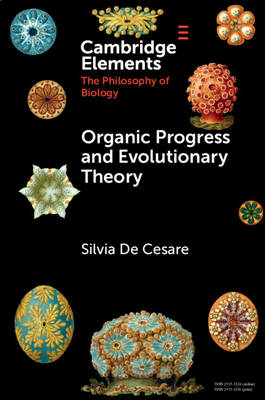
Progress is defined as change towards the better. This definition, comprising both a descriptive and a normative element, can be applied in the organic domain to the history of living organisms. If evolutionary biologists struggle to live with organic progress, they also seem unable to live without it. Are there any theoretical arguments for using the normative terms 'good' and 'better' within evolutionary theory? How do we clarify the idea that some 'change towards the better' is conceptually implied by evolutionary theory? The author argues that there are specific kinds of value, that is, organic value, that allow us to speak meaningfully about improvements in living beings. A large part of this Element is devoted to showing how this applies to the concept of adaptation at a local scale. The final section broadens the investigation to a global scale, tentatively suggesting evolvability as a promising candidate for global progress.
Specificaties
Betrokkenen
- Auteur(s):
- Uitgeverij:
Inhoud
- Aantal bladzijden:
- 92
- Taal:
- Engels
- Reeks:
Eigenschappen
- Productcode (EAN):
- 9781108949491
- Verschijningsdatum:
- 12/03/2026
- Uitvoering:
- Paperback
- Formaat:
- Trade paperback (VS)
- Afmetingen:
- 152 mm x 229 mm
- Gewicht:
- 136 g


Alleen bij Standaard Boekhandel
+ 66 punten op je klantenkaart van Standaard Boekhandel
Cadeau

AANGERADEN


Beoordelingen
We publiceren alleen reviews die voldoen aan de voorwaarden voor reviews. Bekijk onze voorwaarden voor reviews.