



Bedankt voor het vertrouwen het afgelopen jaar! Om jou te bedanken bieden we GRATIS verzending (in België) aan op alles gedurende de hele maand januari.
- Afhalen na 1 uur in een winkel met voorraad
- In januari gratis thuislevering in België
- Ruim aanbod met 7 miljoen producten
Bedankt voor het vertrouwen het afgelopen jaar! Om jou te bedanken bieden we GRATIS verzending (in België) aan op alles gedurende de hele maand januari.
- Afhalen na 1 uur in een winkel met voorraad
- In januari gratis thuislevering in België
- Ruim aanbod met 7 miljoen producten





Omschrijving
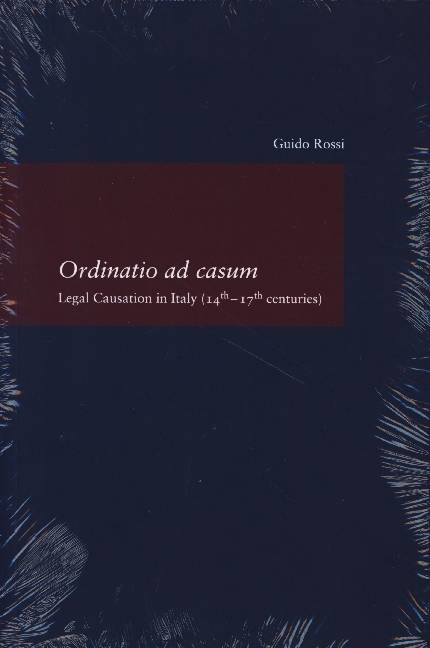
The book examines the development of legal causation in Italy from the fourteenth to the seventeenth centuries, focusing especially on practice-oriented literature (decisiones and consilia). Causality began to be discussed from the late thirteenth century and especially during the first half of the fourteenth when it was described as ordinatio. In private law, ordinatio remained the standard approach to causation during the entire early modern period: centuries of legal practice mainly refined its scope but did not change its core. By contrast, its application in criminal law would increasingly crash with the intentionality requirement, and so it was progressively challenged.
Specificaties
Betrokkenen
- Auteur(s):
- Uitgeverij:
Inhoud
- Aantal bladzijden:
- 332
- Taal:
- Engels
- Reeks:
- Reeksnummer:
- nr. 339
Eigenschappen
- Productcode (EAN):
- 9783465046080
- Verschijningsdatum:
- 24/01/2023
- Uitvoering:
- Paperback
- Afmetingen:
- 160 mm x 21 mm
- Gewicht:
- 542 g


Alleen bij Standaard Boekhandel
+ 175 punten op je klantenkaart van Standaard Boekhandel
SOLDEN


Beoordelingen
We publiceren alleen reviews die voldoen aan de voorwaarden voor reviews. Bekijk onze voorwaarden voor reviews.