


- Afhalen na 1 uur in een winkel met voorraad
- Gratis thuislevering in België vanaf € 30
- Ruim aanbod met 7 miljoen producten
- Afhalen na 1 uur in een winkel met voorraad
- Gratis thuislevering in België vanaf € 30
- Ruim aanbod met 7 miljoen producten





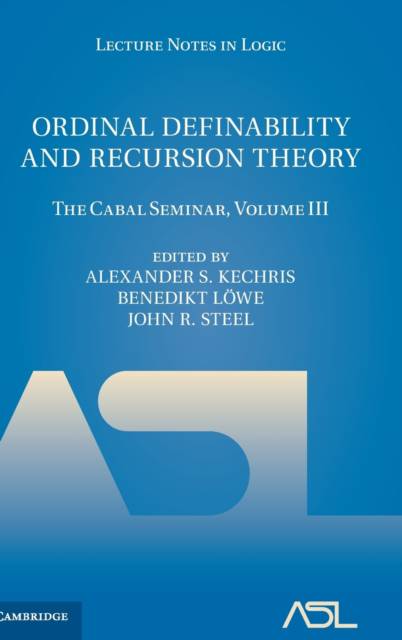
Ordinal Definability and Recursion Theory
The Cabal Seminar, Volume III
€ 328,95
+ 657 punten
Omschrijving
The proceedings of the Los Angeles Caltech-UCLA 'Cabal Seminar' were originally published in the 1970s and 1980s. Ordinal Definability and Recursion Theory is the third in a series of four books collecting the seminal papers from the original volumes together with extensive unpublished material, new papers on related topics and discussion of research developments since the publication of the original volumes. Focusing on the subjects of 'HOD and its Local Versions' (Part V) and 'Recursion Theory' (Part VI), each of the two sections is preceded by an introductory survey putting the papers into present context. These four volumes will be a necessary part of the book collection of every set theorist.
Specificaties
Betrokkenen
- Uitgeverij:
Inhoud
- Aantal bladzijden:
- 552
- Taal:
- Engels
- Reeks:
Eigenschappen
- Productcode (EAN):
- 9781107033405
- Verschijningsdatum:
- 11/01/2016
- Uitvoering:
- Hardcover
- Formaat:
- Genaaid
- Afmetingen:
- 152 mm x 229 mm
- Gewicht:
- 975 g

Alleen bij Standaard Boekhandel
+ 657 punten op je klantenkaart van Standaard Boekhandel
CADEAU

AANGERADEN


Beoordelingen
We publiceren alleen reviews die voldoen aan de voorwaarden voor reviews. Bekijk onze voorwaarden voor reviews.