


- Afhalen na 1 uur in een winkel met voorraad
- Gratis thuislevering in België vanaf € 30
- Ruim aanbod met 7 miljoen producten
- Afhalen na 1 uur in een winkel met voorraad
- Gratis thuislevering in België vanaf € 30
- Ruim aanbod met 7 miljoen producten





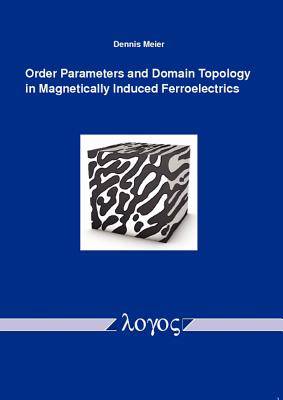
Order Parameters and Domain Topology in Magnetically Induced Ferroelectrics
Dennis Meier
Paperback | Engels
€ 117,95
+ 235 punten
Omschrijving
The coexistence and coupling of magnetic and electric degrees of freedom in so-called multiferroics is not only the origin of new and unusual physical phenomena, these materials also have great potential for multifunctional spintronic applications or future data storage. A particularly interesting class of multiferroics are magnetically induced ferroelectrics. Unfortunately, their physics is currently far from being understood due to highly non-trivial correlation effects between spin, charge and lattice. Besides providing a comprehensive review on magnetically induced ferroelectricity, this work focuses on answering the key questions regarding correlated order parameters and associated domain structures in magnetically induced ferroelectrics. Optical second harmonic generation is applied to analyze the evolution of the symmetry breaking order parameters in the model systems MnWO4 and TbMn2O5. The nature and spatial distribution of domains are studied including correlation effects, their manipulation by thermal annealing procedures, as well as their control by external magnetic or electric fields.
Specificaties
Betrokkenen
- Auteur(s):
- Uitgeverij:
Inhoud
- Aantal bladzijden:
- 130
- Taal:
- Engels
Eigenschappen
- Productcode (EAN):
- 9783832524890
- Verschijningsdatum:
- 30/06/2010
- Uitvoering:
- Paperback
- Formaat:
- Trade paperback (VS)
- Afmetingen:
- 145 mm x 203 mm
- Gewicht:
- 176 g


Alleen bij Standaard Boekhandel
+ 235 punten op je klantenkaart van Standaard Boekhandel
Wedstrijd


Beoordelingen
We publiceren alleen reviews die voldoen aan de voorwaarden voor reviews. Bekijk onze voorwaarden voor reviews.