


- Afhalen na 1 uur in een winkel met voorraad
- Gratis thuislevering in België vanaf € 30
- Ruim aanbod met 7 miljoen producten
- Afhalen na 1 uur in een winkel met voorraad
- Gratis thuislevering in België vanaf € 30
- Ruim aanbod met 7 miljoen producten




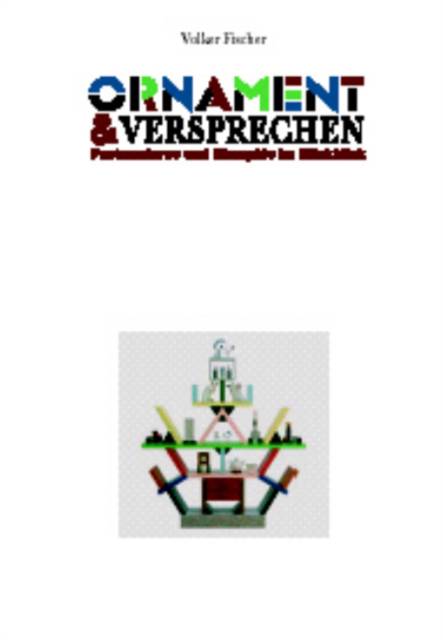
Orament & Versprechen - Postmoderne und Memphis im Rückblick
Katalog zur Ausstellung im Museum für Angewandte Kunst Frankfurt am Main, 2004/2005
Volker Fischer
Paperback | Duits
€ 20,95
+ 41 punten
Omschrijving
The title of the publication is intended as an allusion to the virtually manifesto-like treatise "Ornament und Verbrechen" of 1908 by the Viennese architect Adolf Loos. For more than six decades - from the Deutscher Werkbund and the Bauhaus to the Ulm School and Functionalism - this influential document effectively legitimized the taboo on every kind of decoration and ornamentation. Our title thus calls attention to the change of perspective unanimously adopted by architecture and product design primarily in the 1980s. Both Postmodernism and Memphis - two movements which today exhibit greater similarities than differences - were above all aesthetic reactions to Functionalism, which they considered cold, technocratic and one-sidedly rational. The 1980s were generally described as the decade of a "semantic turn", i. e. a turn towards narrative-poetic products which countered the iconographic drought of late Functionalism with cheeky, nostalgic, brilliantly colourful, ornamentenamoured alternatives.
With its recourse to historical styles from the Renaissance to Biedermeier, Postmodernism also attributed new meaning and relevance to surfaces and their internal structures, and accordingly to decoration and ornamentation. The Memphis designers also generated a new richness and sensuality of the surface, deriving stylistic elements from ethnological ornament or distilling them from contemporary "everyday" surfaces such as tram steps, computer patterns or the printed forms on which every bureaucratic procedure depends. Both Postmodernism and Memphis ultimately attempted to apply traditional means of aesthetic surface design to the "Zweite Moderne" (Second Modernism) of electronics, digitalization, microelectronics and micromechanics. In this sense, as a transitional phase to adigitalized world and product environment, "reornamentalization" was indeed a promise.
With its recourse to historical styles from the Renaissance to Biedermeier, Postmodernism also attributed new meaning and relevance to surfaces and their internal structures, and accordingly to decoration and ornamentation. The Memphis designers also generated a new richness and sensuality of the surface, deriving stylistic elements from ethnological ornament or distilling them from contemporary "everyday" surfaces such as tram steps, computer patterns or the printed forms on which every bureaucratic procedure depends. Both Postmodernism and Memphis ultimately attempted to apply traditional means of aesthetic surface design to the "Zweite Moderne" (Second Modernism) of electronics, digitalization, microelectronics and micromechanics. In this sense, as a transitional phase to adigitalized world and product environment, "reornamentalization" was indeed a promise.
Specificaties
Betrokkenen
- Auteur(s):
- Uitgeverij:
Inhoud
- Aantal bladzijden:
- 64
- Taal:
- Duits
Eigenschappen
- Productcode (EAN):
- 9783932565458
- Verschijningsdatum:
- 11/05/2021
- Uitvoering:
- Paperback
- Afmetingen:
- 210 mm x 300 mm
- Gewicht:
- 374 g


Alleen bij Standaard Boekhandel
+ 41 punten op je klantenkaart van Standaard Boekhandel
AANGERADEN


Beoordelingen
We publiceren alleen reviews die voldoen aan de voorwaarden voor reviews. Bekijk onze voorwaarden voor reviews.