



Je cadeautjes zeker op tijd in huis hebben voor de feestdagen? Kom langs in onze winkels en vind het perfecte geschenk!
- Afhalen na 1 uur in een winkel met voorraad
- Gratis thuislevering in België vanaf € 30
- Ruim aanbod met 7 miljoen producten
Je cadeautjes zeker op tijd in huis hebben voor de feestdagen? Kom langs in onze winkels en vind het perfecte geschenk!
- Afhalen na 1 uur in een winkel met voorraad
- Gratis thuislevering in België vanaf € 30
- Ruim aanbod met 7 miljoen producten





€ 64,95
+ 129 punten
Uitvoering
Omschrijving
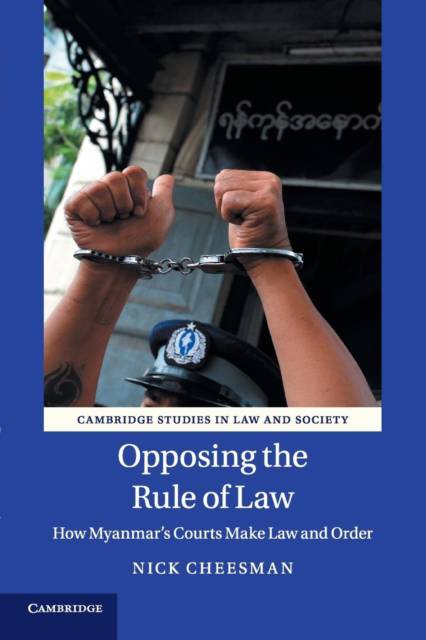
The rule of law is a political ideal today endorsed and promoted worldwide. Or is it? In a significant contribution to the field, Nick Cheesman argues that Myanmar is a country in which the rule of law is 'lexically present but semantically absent'. Charting ideas and practices from British colonial rule through military dictatorship to the present day, Cheesman calls upon political and legal theory to explain how and why institutions animated by a concern for law and order oppose the rule of law. Empirically grounded in both Burmese and English sources, including criminal trial records and wide ranging official documents, Opposing the Rule of Law offers the first significant study of courts in contemporary Myanmar. It sheds new light on the politics of courts during dark times and sharply illuminates the tension between the demand for law and the imperatives of order.
Specificaties
Betrokkenen
- Auteur(s):
- Uitgeverij:
Inhoud
- Aantal bladzijden:
- 338
- Taal:
- Engels
- Reeks:
Eigenschappen
- Productcode (EAN):
- 9781107443761
- Verschijningsdatum:
- 28/05/2016
- Uitvoering:
- Paperback
- Formaat:
- Trade paperback (VS)
- Afmetingen:
- 152 mm x 229 mm
- Gewicht:
- 453 g


Alleen bij Standaard Boekhandel
+ 129 punten op je klantenkaart van Standaard Boekhandel
CADEAU


Beoordelingen
We publiceren alleen reviews die voldoen aan de voorwaarden voor reviews. Bekijk onze voorwaarden voor reviews.