


- Afhalen na 1 uur in een winkel met voorraad
- Gratis thuislevering in België vanaf € 30
- Ruim aanbod met 7 miljoen producten
- Afhalen na 1 uur in een winkel met voorraad
- Gratis thuislevering in België vanaf € 30
- Ruim aanbod met 7 miljoen producten





€ 71,45
+ 142 punten
Eenvoudig bestellen
Veilig betalen


Gratis thuislevering vanaf € 30 (via bpost)
Gratis levering in je Standaard Boekhandel
Omschrijving
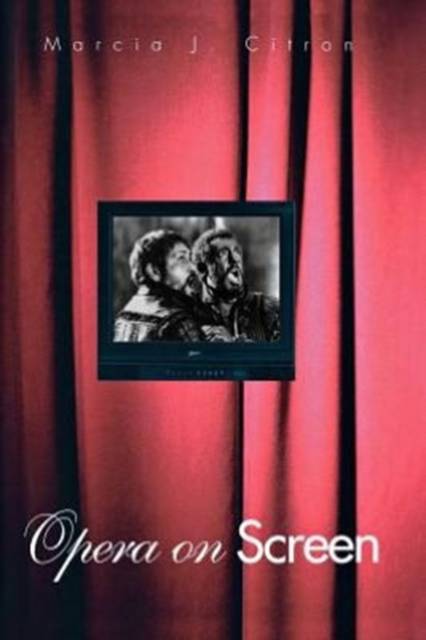
What happens to opera when it's presented on the screen? How does an opera change when it becomes a movie, a television presentation, or a video? This book is the first to explore opera and its treatment on the screen from a musicologist's perspective. Marcia Citron provides a fascinating history of the nearly 100-year-old genre, examines landmark works of opera on screen from a variety of viewpoints, and shows how different electronic media shape the conception of this art form. The book begins with a comprehensive survey of the origins and development of screen opera. Citron then focuses on such significant works as Franco Zeffirelli's Otello, Francesco Rosi's Bizet's Carmen, Joseph Losey's Don Giovanni, Michael Powell and Emeric Pressburger's Tales of Hoffmann, Hans-Jürgen Syberberg's Parsifal, Peter Sellars's four opera productions for television, and the celebrated relay telecast of Otello from the Royal Opera House in London. The author draws on ideas from diverse fields, including media studies and gender studies, to examine issues ranging from the relationship between sound and image to the place of the viewer in relation to the spectacle. As she raises questions about divisions between high art and popular art and about the tensions between live and reproduced art forms, Citron reveals how screen treatments reinforce opera's vitality in a media-intensive age.
Specificaties
Betrokkenen
- Auteur(s):
- Uitgeverij:
Inhoud
- Aantal bladzijden:
- 312
- Taal:
- Engels
Eigenschappen
- Productcode (EAN):
- 9780300191417
- Verschijningsdatum:
- 1/03/2000
- Uitvoering:
- Paperback
- Formaat:
- Trade paperback (VS)
- Afmetingen:
- 152 mm x 229 mm
- Gewicht:
- 449 g


Alleen bij Standaard Boekhandel
+ 142 punten op je klantenkaart van Standaard Boekhandel
CADEAU

AANGERADEN


Beoordelingen
We publiceren alleen reviews die voldoen aan de voorwaarden voor reviews. Bekijk onze voorwaarden voor reviews.