


- Afhalen na 1 uur in een winkel met voorraad
- Gratis thuislevering in België vanaf € 30
- Ruim aanbod met 7 miljoen producten
- Afhalen na 1 uur in een winkel met voorraad
- Gratis thuislevering in België vanaf € 30
- Ruim aanbod met 7 miljoen producten





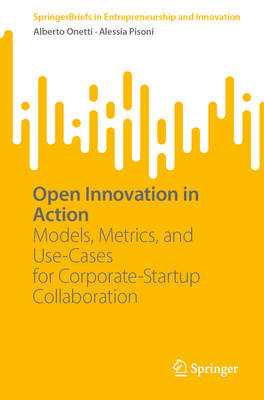
Open Innovation in Action
Models, Metrics, and Use-Cases for Corporate-Startup Collaboration
Alberto Onetti, Alessia Pisoni
€ 54,45
+ 108 punten
Omschrijving
The book serves as both a practical guide for managers looking to implement Open Innovation strategies and an authoritative reference for scholars conducting research in the field. Drawing on nearly two decades of combined academic and practitioner experience in entrepreneurship and open innovation, the authors offer a comprehensive, 360-degree perspective on the topic. Specifically, the book offers a fresh, up-to-date, and practice-driven perspective on how large corporations are implementing open innovation today, with a particular focus on startup collaboration and the most recent, real-world best practices. Leveraging privileged access to Mind the Bridge's extensive activities - including proprietary research data, C-level executive interviews, and global events - this book offers strategies based on an analysis of various companies across sectors, and geographies that have started, scaled, evolved, reshaped, or even abandoned their open innovation journeys. The book helps corporate and startup executives/founders design, refine, and adapt their own open innovation strategies; identify the models that best fit their needs; understand the organizational and cultural conditions required; and, ultimately, track and measure results in a meaningful way.
Specificaties
Betrokkenen
- Auteur(s):
- Uitgeverij:
Inhoud
- Aantal bladzijden:
- 58
- Taal:
- Engels
- Reeks:
Eigenschappen
- Productcode (EAN):
- 9783032173317
- Verschijningsdatum:
- 14/04/2026
- Uitvoering:
- Paperback
- Formaat:
- Trade paperback (VS)
- Afmetingen:
- 155 mm x 235 mm


Alleen bij Standaard Boekhandel
+ 108 punten op je klantenkaart van Standaard Boekhandel
Cadeau

AANGERADEN


Beoordelingen
We publiceren alleen reviews die voldoen aan de voorwaarden voor reviews. Bekijk onze voorwaarden voor reviews.