


- Afhalen na 1 uur in een winkel met voorraad
- Gratis thuislevering in België vanaf € 30
- Ruim aanbod met 7 miljoen producten
- Afhalen na 1 uur in een winkel met voorraad
- Gratis thuislevering in België vanaf € 30
- Ruim aanbod met 7 miljoen producten





€ 38,45
+ 76 punten
Omschrijving
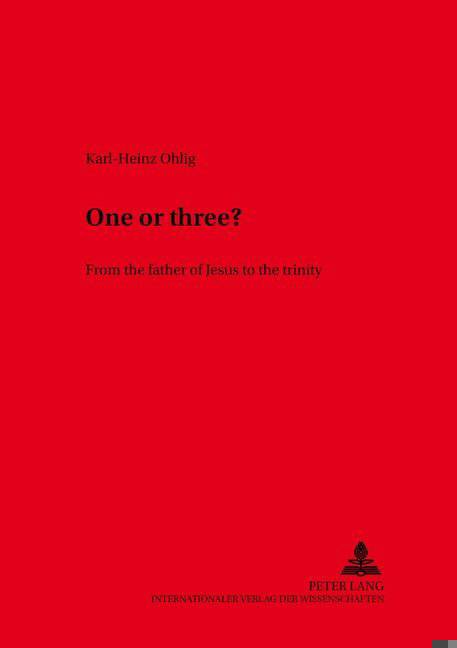
The study shall demonstrate that the dogma of the Trinity is a product of historical developments. Jesus believed in Jahwe and called him Father. This monotheism was a central subject of the earliest Christian preachings. The contact between the Christianity and the hellenistic thinking and philosophy led to the trinitarian concepts in the second century: the activities of God were interpreted «ad extra», to the outside (the creation «in the beginning» and the guidance over the history of Israel and of the church) as ontological hypostasis in the concept of the «Word» and the «Holy Ghost». In the third century they lost their temporal character and became eternal «qualities» of God himself. Since the fifth century the western Latin theology produced the doctrine of the three persons in God.
Specificaties
Betrokkenen
- Auteur(s):
- Uitgeverij:
Inhoud
- Aantal bladzijden:
- 140
- Taal:
- Duits
- Reeks:
- Reeksnummer:
- nr. 8
Eigenschappen
- Productcode (EAN):
- 9783631503379
- Verschijningsdatum:
- 9/01/2003
- Uitvoering:
- Paperback
- Formaat:
- Trade paperback (VS)
- Afmetingen:
- 148 mm x 210 mm
- Gewicht:
- 199 g


Alleen bij Standaard Boekhandel
+ 76 punten op je klantenkaart van Standaard Boekhandel
Cadeau

AANGERADEN


Beoordelingen
We publiceren alleen reviews die voldoen aan de voorwaarden voor reviews. Bekijk onze voorwaarden voor reviews.