


- Afhalen na 1 uur in een winkel met voorraad
- Gratis thuislevering in België vanaf € 30
- Ruim aanbod met 7 miljoen producten
- Afhalen na 1 uur in een winkel met voorraad
- Gratis thuislevering in België vanaf € 30
- Ruim aanbod met 7 miljoen producten






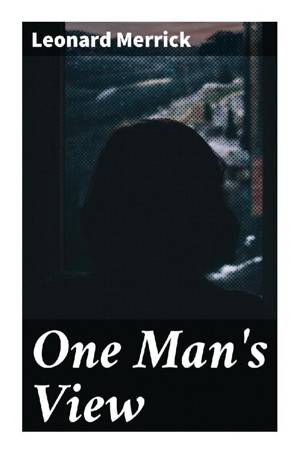
One Man's View
A Late-Victorian Psychological Novel of Love, Ambition, Marriage, and London Society
Leonard Merrick
Paperback | Engels
€ 8,45
+ 16 punten
Omschrijving
One Man's View is a finely modulated late-Victorian novel concerned with perception: how a single consciousness interprets love, duty, ambition, and disappointment in a society quick to convert private feeling into public judgment. Merrick's realism is intimate rather than panoramic, relying on supple dialogue, ironic compression, and the theatrical management of scene to expose moral self-deception. Set within the fin-de-siècle world of cultivated drawing rooms, professional aspiration, and shifting gender expectations, the book belongs beside the quieter psychological fiction of the 1890s, where character is revealed less by incident than by nuance. Leonard Merrick, born Leonard Miller in London, brought to fiction an unusually practical knowledge of performance, failure, and the precarious economies of artistic life. Before gaining recognition as a novelist, he worked in and around the theatre and knew the frustrations of authorship from within. Often praised by contemporaries as a "novelist's novelist," Merrick was drawn to gifted, vulnerable people whose ideals are tested by compromise-an interest that clearly informs this book's emotional intelligence. Readers who value elegant psychological realism, humane irony, and fiction attentive to the costs of self-knowledge will find One Man's View rewarding. It is especially recommended to admirers of late-Victorian and Edwardian novels that privilege moral subtlety over melodrama.
Specificaties
Betrokkenen
- Auteur(s):
- Uitgeverij:
Inhoud
- Taal:
- Engels
Eigenschappen
- Productcode (EAN):
- 9788027293599
- Uitvoering:
- Paperback
- Afmetingen:
- 152 mm x 229 mm
- Gewicht:
- 120 g


Alleen bij Standaard Boekhandel
+ 16 punten op je klantenkaart van Standaard Boekhandel
CADEAU

AANGERADEN


Beoordelingen
We publiceren alleen reviews die voldoen aan de voorwaarden voor reviews. Bekijk onze voorwaarden voor reviews.