



Je cadeautjes zeker op tijd in huis hebben voor de feestdagen? Kom langs in onze winkels en vind het perfecte geschenk!
- Afhalen na 1 uur in een winkel met voorraad
- Gratis thuislevering in België vanaf € 30
- Ruim aanbod met 7 miljoen producten
Je cadeautjes zeker op tijd in huis hebben voor de feestdagen? Kom langs in onze winkels en vind het perfecte geschenk!
- Afhalen na 1 uur in een winkel met voorraad
- Gratis thuislevering in België vanaf € 30
- Ruim aanbod met 7 miljoen producten





€ 49,95
+ 99 punten
Omschrijving
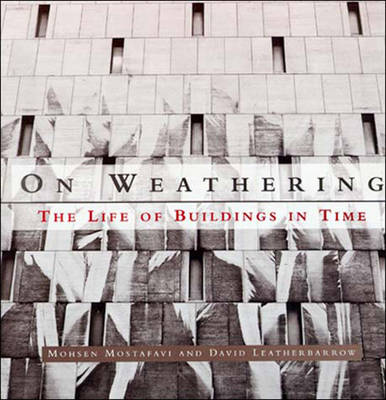
On Weathering illustrates the complex nature of the architectural project by taking into account its temporality, linking technical problems of maintenance and decay with a focused consideration of their philosophical and ethical implications.In a clear and direct account supplemented by many photographs commissioned for this book, Mostafavi and Leatherbarrow examine buildings and other projects from Alberti to Le Corbusier to show that the continual refinishing of the building by natural forces adds to, rather than detracts from, architectural meaning. Their central discovery, that weathering makes the final state of the construction necessarily indefinite, challenges the conventional notion of a building's completeness. By recognizing the inherent uncertainty and inevitability of weathering and by viewing the concept of weathering as a continuation of the building process rather than as a force antagonistic to it, the authors offer alternative readings of historical constructions and potential beginnings for new architectural projects.
Specificaties
Betrokkenen
- Auteur(s):
- Uitgeverij:
Inhoud
- Aantal bladzijden:
- 148
- Taal:
- Engels
- Reeks:
Eigenschappen
- Productcode (EAN):
- 9780262631440
- Verschijningsdatum:
- 22/03/1993
- Uitvoering:
- Paperback
- Formaat:
- Trade paperback (VS)
- Afmetingen:
- 226 mm x 226 mm
- Gewicht:
- 362 g


Alleen bij Standaard Boekhandel
+ 99 punten op je klantenkaart van Standaard Boekhandel
CADEAU


Beoordelingen
We publiceren alleen reviews die voldoen aan de voorwaarden voor reviews. Bekijk onze voorwaarden voor reviews.