


- Afhalen na 1 uur in een winkel met voorraad
- Gratis thuislevering in België vanaf € 30
- Ruim aanbod met 7 miljoen producten
- Afhalen na 1 uur in een winkel met voorraad
- Gratis thuislevering in België vanaf € 30
- Ruim aanbod met 7 miljoen producten





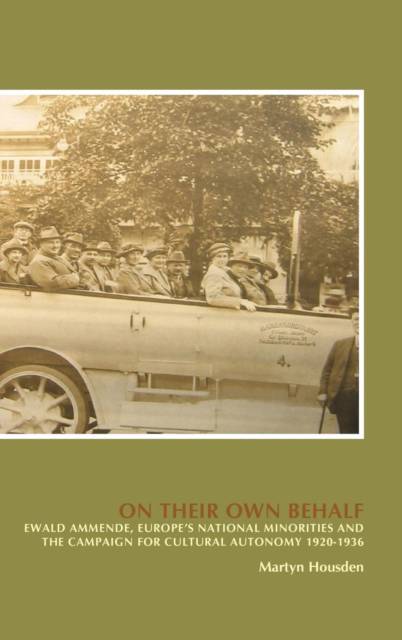
On Their Own Behalf
Ewald Ammende, Europe's National Minorities and the Campaign for Cultural Autonomy 1920-1936
Martyn Housden
€ 110,60
+ 221 punten
Omschrijving
What form should Europe take? Should it be based on 'nation states' or 'states of nations'? On what basis should European unification proceed? Should it be an élite undertaking pioneered by statesmen elected to democratic government offices, or should true unification also demand a significant European cultural forum open to spokesmen and -women representing the continent's nationality groups? Was the League of Nations really such a thing? Or was it a League of States? All these questions were posed by Ewald Ammende and his fellow minority associates during the 1920s. Coming to terms with the consequences of collapsed empires and at least four years of conflict, they were forced to consider how best to re-build their continent as if it were a tabula rasa. In the process, they provided intelligent, perceptive analyses of the national and international affairs of the day, particularly as they affected Central and Eastern Europe. Their voices, reflecting their status as national minorities and a geographical location beyond the borders of the post-war Great Powers, deserve to be written more thoroughly into the history of the interwar years. Their ideas still provide food for thought even today.
Specificaties
Betrokkenen
- Auteur(s):
- Uitgeverij:
Inhoud
- Aantal bladzijden:
- 16
- Taal:
- Engels
- Reeks:
- Reeksnummer:
- nr. 37
Eigenschappen
- Productcode (EAN):
- 9789042038769
- Verschijningsdatum:
- 1/01/2014
- Uitvoering:
- Hardcover
- Formaat:
- Genaaid
- Afmetingen:
- 155 mm x 234 mm
- Gewicht:
- 771 g



Alleen bij Standaard Boekhandel
+ 221 punten op je klantenkaart van Standaard Boekhandel
Cadeau

AANGERADEN


Beoordelingen
We publiceren alleen reviews die voldoen aan de voorwaarden voor reviews. Bekijk onze voorwaarden voor reviews.