


- Afhalen na 1 uur in een winkel met voorraad
- Gratis thuislevering in België vanaf € 30
- Ruim aanbod met 7 miljoen producten
- Afhalen na 1 uur in een winkel met voorraad
- Gratis thuislevering in België vanaf € 30
- Ruim aanbod met 7 miljoen producten





€ 55,45
+ 110 punten
Omschrijving
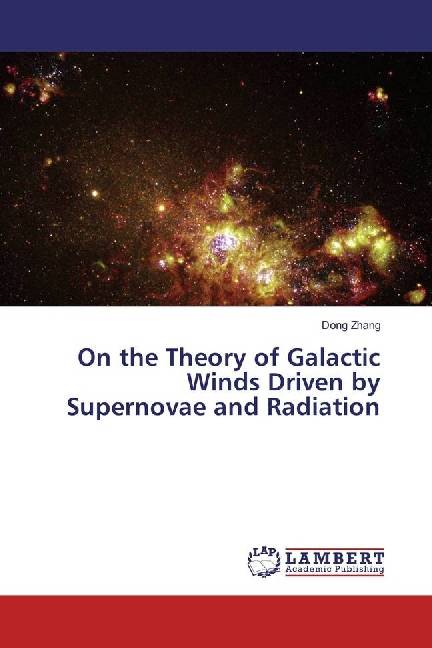
Galactic winds are ubiquitous in most rapidly star-forming galaxies. They are crucial to the process of galaxy formation and evolution, regulating star formation, shaping the stellar mass function and the mass-metallicity relation, and enriching the intergalactic medium with metals. Although important, the physics of galactic winds is still unclear. Many theoretical mechanisms have been proposed. Winds may be driven by the heating of the interstellar medium by overlapping supernovae explosions, the radiation pressure by continuum absorption and scattering of starlight on dust grains, and so on. The comparison between theory and observation is still incomplete. A full understanding of these issues requires both better theoretical explorations and comparisons with new and existing observations. In this book I discuss the theoretical models of both supernovae driven and radiation pressure driven galactic winds, and compared these models with observations.
Specificaties
Betrokkenen
- Auteur(s):
- Uitgeverij:
Inhoud
- Aantal bladzijden:
- 156
- Taal:
- Engels
Eigenschappen
- Productcode (EAN):
- 9783330016491
- Uitvoering:
- Paperback
- Afmetingen:
- 150 mm x 220 mm


Alleen bij Standaard Boekhandel
+ 110 punten op je klantenkaart van Standaard Boekhandel
AANGERADEN


Beoordelingen
We publiceren alleen reviews die voldoen aan de voorwaarden voor reviews. Bekijk onze voorwaarden voor reviews.