


- Afhalen na 1 uur in een winkel met voorraad
- Gratis thuislevering in België vanaf € 30
- Ruim aanbod met 7 miljoen producten
- Afhalen na 1 uur in een winkel met voorraad
- Gratis thuislevering in België vanaf € 30
- Ruim aanbod met 7 miljoen producten





On Proving God's Existence by Reason Alone
A Logical and Epistemological Study of Saint Anselm's and Plantinga's Ontological Arguments
Reto Gubelmann
Paperback | Engels
€ 32,45
+ 64 punten
Omschrijving
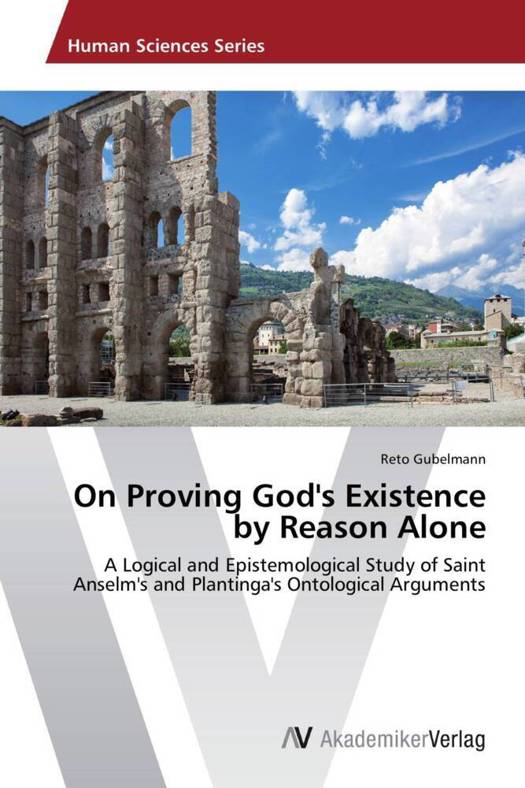
Much of the fascination and puzzlement caused by ontological arguments may be to do with the fact that they arrive at their conclusion, which consists in nothing less than the existence of God, in an astonishingly simple way. The Anselmian version, as a case in point, can be explained to lay persons in a few minutes. How can it be that such an innocent-looking argument establishes such a weighty conclusion? This perplexity has provoked analytically minded philosophers to try to find some kind of formal or informal fallacy in its structure ever since Anselm stated it for the first time. In this book, I show that this method of discussing ontological arguments is incomplete. The key to understanding ontological arguments does not lie in the arguments themselves, but in their philosophical background. To substantiate this claim, I examine two different ontological arguments, that of Saint Anselm of Canterbury and the modal ontological argument proposed by Alvin Plantinga. Then, I explore Kant's refutation of ontological arguments in his Critique of Pure Reason, and I argue that Kant's refutation does not proceed by logical analysis, but rather by undermining the ontological arguments' epistemological underpinnings. (The cover image shows the Roman theatre of Aosta, Saint Anselm's Birthplace.)
Specificaties
Betrokkenen
- Auteur(s):
- Uitgeverij:
Inhoud
- Aantal bladzijden:
- 120
- Taal:
- Engels
Eigenschappen
- Productcode (EAN):
- 9783639496901
- Verschijningsdatum:
- 21/02/2014
- Uitvoering:
- Paperback
- Afmetingen:
- 150 mm x 220 mm
- Gewicht:
- 176 g


Alleen bij Standaard Boekhandel
+ 64 punten op je klantenkaart van Standaard Boekhandel
Cadeau

AANGERADEN


Beoordelingen
We publiceren alleen reviews die voldoen aan de voorwaarden voor reviews. Bekijk onze voorwaarden voor reviews.