


- Afhalen na 1 uur in een winkel met voorraad
- Gratis thuislevering in België vanaf € 30
- Ruim aanbod met 7 miljoen producten
- Afhalen na 1 uur in een winkel met voorraad
- Gratis thuislevering in België vanaf € 30
- Ruim aanbod met 7 miljoen producten





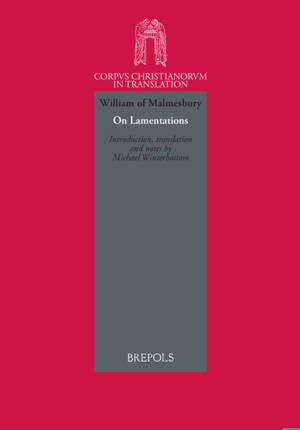
On Lamentations
Michael Winterbottom
€ 68,90
+ 137 punten
Omschrijving
William, a Benedictine monk of Malmesbury in western England (died c. 1143), is well known as the author of major historical works. But his commentary on Lamentations was not published in full until 2011. It presents itself as an abbreviation of the work of a ninth-century predecessor, Paschasius Radbertus. But William aimed to re-write and improve on his source in both content and style. His characteristic mastery of the Bible and of an astonishingly wide range of classical and patristic texts is everywhere apparent. His Latin is elegant, not to say mannered and sometimes obscure, and presents many problems to the translator.William tells us that he had just turned forty, and had moved away from history to something more religious, that would conduce to his own moral improvement and to that of his readers. But the evils of the present age are often attacked, and commentary becomes moralising history by another means.A personal note, too, often comes through. William feels freer in this medium to comment adversely on the Norman conquest of England, and his struggles with the demons that tempted him and with his own conscience are often vividly evoked. Heartfelt prayers regularly round off the sections of his book. Profoundly influenced by Augustine, he made his commentary a meditation. The source text of this volume appeared in Corpus Christianorum Continuatio Mediaeualis as Willelmus Meldunensis monachus - Liber super explanationem Lamentationum Ieremiae prophetae (CCCM 244). References to the corresponding pages of the Corpus Christianorum edition are provided in the margins of this translation. Michael Winterbottom (born in 1934) spent most of his career teaching in Oxford, where he was Corpus Christi Professor of Latin from 1993 to 2001; he has edited several Latin prose texts of the classical period, but for thirty years has been working especially on William of Malmesbury, in collaboration with R. M. Thomson.
Specificaties
Betrokkenen
- Auteur(s):
- Uitgeverij:
Inhoud
- Aantal bladzijden:
- 410
- Taal:
- Engels
- Reeks:
- Reeksnummer:
- nr. 13
Eigenschappen
- Productcode (EAN):
- 9782503548494
- Verschijningsdatum:
- 15/07/2013
- Uitvoering:
- Paperback
- Formaat:
- Trade paperback (VS)
- Gewicht:
- 6799 g


Alleen bij Standaard Boekhandel
+ 137 punten op je klantenkaart van Standaard Boekhandel
Cadeau

AANGERADEN


Beoordelingen
We publiceren alleen reviews die voldoen aan de voorwaarden voor reviews. Bekijk onze voorwaarden voor reviews.