


- Afhalen na 1 uur in een winkel met voorraad
- Gratis thuislevering in België vanaf € 30
- Ruim aanbod met 7 miljoen producten
- Afhalen na 1 uur in een winkel met voorraad
- Gratis thuislevering in België vanaf € 30
- Ruim aanbod met 7 miljoen producten





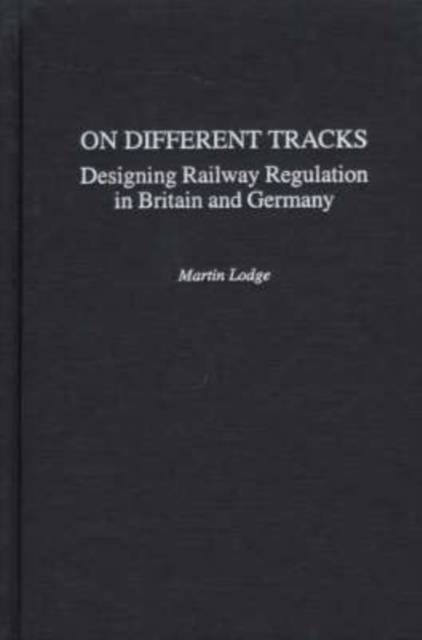
On Different Tracks
Designing Railway Regulation in Britain and Germany
Martin Lodge
Hardcover | Engels
€ 169,95
+ 339 punten
Omschrijving
The governments of several countries are in the process of reforming their regulatory regimes for the railways, and there is much debate about the appropriate regulation of transport in general and railways in particular--especially in light of environmental concerns about traffic congestion and air pollution and economic concerns about the financing of infrastructure and services. This volume investigates how Britain and Germany regulated their railways at three different points in time over the past century: after the First World War, after the Second World War, and in the 1990s. Its central focus is the design of regulatory regimes and the impact of institutional factors on the selection of design ideas and on processes of isomorphism. By placing a comparative analysis of regulatory design in a historical context and an institutional framework, the author contributes to the current debate on the emergence of the regulatory state in the late 20th century.
Specificaties
Betrokkenen
- Auteur(s):
- Uitgeverij:
Inhoud
- Aantal bladzijden:
- 232
- Taal:
- Engels
Eigenschappen
- Productcode (EAN):
- 9780275976019
- Verschijningsdatum:
- 30/11/2002
- Uitvoering:
- Hardcover
- Formaat:
- Genaaid
- Afmetingen:
- 178 mm x 230 mm
- Gewicht:
- 489 g



Alleen bij Standaard Boekhandel
+ 339 punten op je klantenkaart van Standaard Boekhandel
Cadeau

AANGERADEN


Beoordelingen
We publiceren alleen reviews die voldoen aan de voorwaarden voor reviews. Bekijk onze voorwaarden voor reviews.