


- Afhalen na 1 uur in een winkel met voorraad
- Gratis thuislevering in België vanaf € 30
- Ruim aanbod met 7 miljoen producten
- Afhalen na 1 uur in een winkel met voorraad
- Gratis thuislevering in België vanaf € 30
- Ruim aanbod met 7 miljoen producten





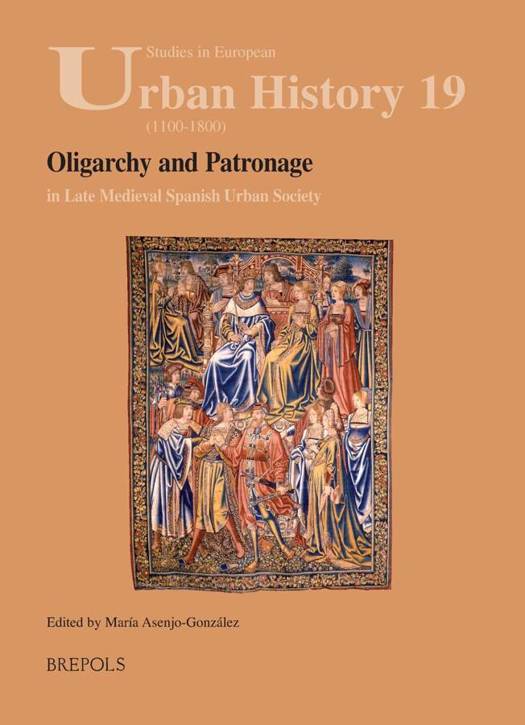
Oligarchy and Patronage in Late Medieval Spanish Urban Society
María Asenjo-González
€ 37,10
+ 74 punten
Omschrijving
Historians have considered medieval oligarchic groups as part of a hierarchical social structure in urban societies. Frequently the interpretation of oligarchy as an isolated faction makes it difficult to understand its capacity in processes of incorporation and integration. F. Sabate i Curull studies the social consequences of the merchant oligarchy investments in the urban surroundings that contributed to establishing a flow of capital between the city and the region in Catalonia. The M. Asenjo-Gonzalez's study of different cities in Northern Castile - Segovia, Soria, Valladolid and Toledo -attempts to identify bonding processes and the relationships among individuals or groups. Y. Guerrero-Navarrete studies the connections between financial groups and the oligarchic policy of the elite in the case of Burgos. In Granada, A. Galan-Sanchez analyzes the Islamic elites behaviour, considering on one side their economic and political interests, related to the goodwill of the Christian conquerors, and, on the other side, their functions as representatives of the second-class citizens who were the moriscos. In the city of Cuenca, J. A. Jara-Fuente stresses the importance of mechanisms for the attribution of social spaces of projection (related to individuals, lineages or collectivities), because it is through the analysis of the social expectations and of the degree of satisfaction reached in that process that other patterns of relationship come to light. And finally E. Ramirez-Vaquero analyzes aspects of great relevance such as the relationship that oligarchies had with other systems linked to the noble and court spheres in the cities of Navarra.
Specificaties
Betrokkenen
- Auteur(s):
- Uitgeverij:
Inhoud
- Aantal bladzijden:
- 207
- Taal:
- Engels
- Reeks:
- Reeksnummer:
- nr. 19
Eigenschappen
- Productcode (EAN):
- 9782503523606
- Verschijningsdatum:
- 23/06/2009
- Uitvoering:
- Paperback
- Formaat:
- Trade paperback (VS)
- Afmetingen:
- 180 mm x 254 mm
- Gewicht:
- 453 g


Alleen bij Standaard Boekhandel
+ 74 punten op je klantenkaart van Standaard Boekhandel
Cadeau

AANGERADEN


Beoordelingen
We publiceren alleen reviews die voldoen aan de voorwaarden voor reviews. Bekijk onze voorwaarden voor reviews.