


- Afhalen na 1 uur in een winkel met voorraad
- Gratis thuislevering in België vanaf € 30
- Ruim aanbod met 7 miljoen producten
- Afhalen na 1 uur in een winkel met voorraad
- Gratis thuislevering in België vanaf € 30
- Ruim aanbod met 7 miljoen producten





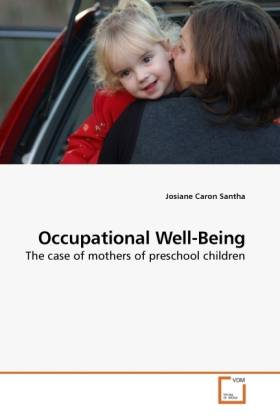
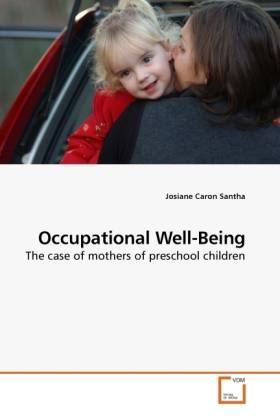
Occupational Well-Being
The case of mothers of preschool children
Josiane Caron Santha
Paperback | Engels
€ 58,45
+ 116 punten
Omschrijving
This study examined the measurement properties of the version of the Occupational Well-Being Questionnaire (OWBQ) comprised of 24 items and a 6-point rating scale. Data were collected from a heterogeneous sample of 48 mothers of preschool children. Multi-faceted Rasch analysis was used to analyze the data. 95.8% of the items on the scale cohered into a unidimensional construct and met the other requirements for linear measurement. Items had an excellent range of difficulty and were separated into seven strata. The scale was sufficiently sensitive to separate participants into five different ability levels. The OWBQ validly measured 91.7% of the participants in the sample. The scale was appropriately targeted to the participants with a mean participants measure of 0.25 logits (sd= 0.91) and an equitable use of the anchors on the rating scale. Occupational well-being was moderately related to perceived time spent in leisure and satisfaction with time use.
Specificaties
Betrokkenen
- Auteur(s):
- Uitgeverij:
Inhoud
- Aantal bladzijden:
- 144
- Taal:
- Engels
Eigenschappen
- Productcode (EAN):
- 9783639194067
- Verschijningsdatum:
- 7/04/2010
- Uitvoering:
- Paperback
- Afmetingen:
- 152 mm x 229 mm
- Gewicht:
- 222 g


Alleen bij Standaard Boekhandel
+ 116 punten op je klantenkaart van Standaard Boekhandel
Cadeau

AANGERADEN


Beoordelingen
We publiceren alleen reviews die voldoen aan de voorwaarden voor reviews. Bekijk onze voorwaarden voor reviews.