


- Afhalen na 1 uur in een winkel met voorraad
- Gratis thuislevering in België vanaf € 30
- Ruim aanbod met 7 miljoen producten
- Afhalen na 1 uur in een winkel met voorraad
- Gratis thuislevering in België vanaf € 30
- Ruim aanbod met 7 miljoen producten





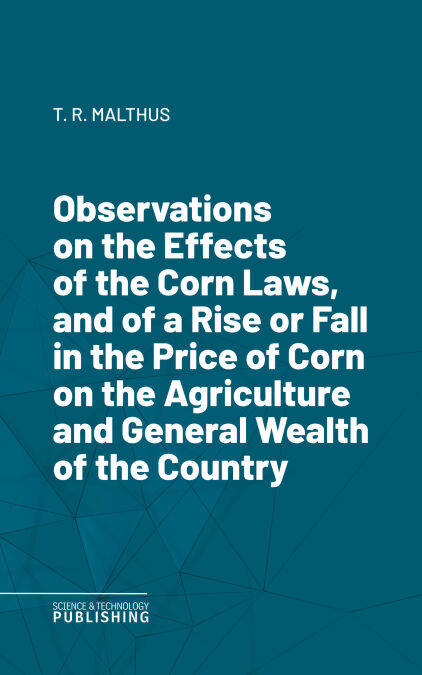
Observations on the Effects of the Corn Laws, and of a Rise or Fall in the Price of Corn on the Agriculture and General Wealth of the Country E-BOOK
Thomas Robert Malthus
E-book | Engels
€ 19,99
+ 19 punten
Eenvoudig bestellen
Veilig betalen


Onmiddellijk geleverd via e-mail
Omschrijving
Observations on the Effects of the Corn Laws, and of a Rise or Fall in the Price of Corn on the Agriculture and General Wealth of the Country is a seminal work by Thomas Robert Malthus, first published in 1814, that delves into the economic and social consequences of the Corn Laws in early 19th-century Britain. The Corn Laws were a series of regulations and tariffs on imported grain, designed to protect domestic agriculture by keeping grain prices high. Malthus, a renowned political economist and demographer, examines the intricate relationship between agricultural policy, food prices, and the broader economy. In this treatise, Malthus explores how fluctuations in the price of corn—Britain’s staple grain—affect not only farmers and landowners but also the general population and national prosperity. He argues that while high corn prices may benefit agricultural producers by increasing their income and encouraging domestic production, they can also lead to higher food costs for consumers, potentially reducing the purchasing power of the working classes and stifling industrial growth. Conversely, a fall in corn prices, often resulting from increased imports, may lower food costs and benefit consumers, but it can also threaten the livelihoods of domestic farmers and reduce agricultural investment. Malthus provides a nuanced analysis of the balance between agricultural and industrial interests, emphasizing the importance of maintaining a stable and prosperous agricultural sector as the foundation of national wealth. He discusses the potential dangers of over-reliance on foreign grain, the impact of price volatility on rural communities, and the broader implications for employment, wages, and social stability. Throughout the book, Malthus employs his characteristic logical rigor and empirical observation, drawing on contemporary data and economic theory to support his arguments. Observations on the Effects of the Corn Laws is not only a critical historical document in the debate over protectionism and free trade but also a foundational text in the development of classical economics. Malthus’s insights into the interplay between agriculture, trade policy, and economic welfare remain relevant to modern discussions on food security, globalization, and the role of government intervention in markets. This work is essential reading for students of economic history, policy makers, and anyone interested in the origins and consequences of agricultural policy in shaping national economies.
Specificaties
Betrokkenen
- Auteur(s):
- Uitgeverij:
Inhoud
- Taal:
- Engels
Eigenschappen
- Productcode (EAN):
- 9782528100486
- Verschijningsdatum:
- 31/08/2025
- Uitvoering:
- E-book
- Formaat:
- ePub


Alleen bij Standaard Boekhandel
+ 19 punten op je klantenkaart van Standaard Boekhandel
CADEAU

AANGERADEN


Beoordelingen
We publiceren alleen reviews die voldoen aan de voorwaarden voor reviews. Bekijk onze voorwaarden voor reviews.