



- Afhalen na 1 uur in een winkel met voorraad
- In januari gratis thuislevering in België
- Ruim aanbod met 7 miljoen producten
- Afhalen na 1 uur in een winkel met voorraad
- In januari gratis thuislevering in België
- Ruim aanbod met 7 miljoen producten





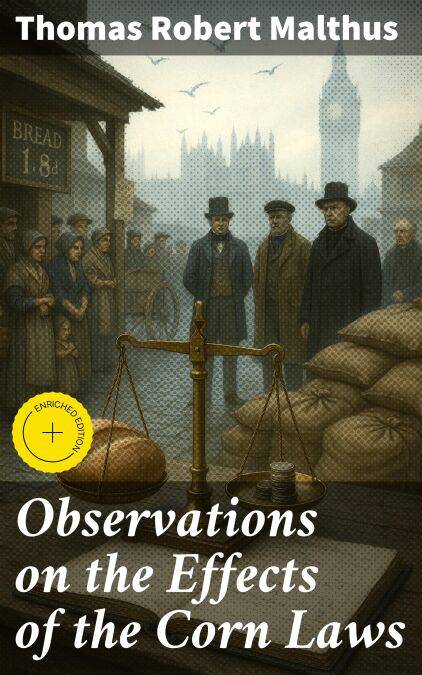
Observations on the Effects of the Corn Laws E-BOOK
Enriched edition. Unveiling the Socioeconomic Impact of Agricultural Legislation
Thomas Robert Malthus
E-book | Engels
€ 1,99
+ 1 punten
Uitvoering
Omschrijving
In "Observations on the Effects of the Corn Laws," Thomas Robert Malthus critically examines the legislative framework governing grain prices in early 19th-century England. His incisive analysis blends economic theory with social critique, employing a structured argumentation style characterized by clarity and rigour. Malthus contextualizes the Corn Laws within the broader framework of his Malthusian theory of population, elucidating the detrimental impact these laws impose on the impoverished classes and their implications for national welfare and economic growth. Thomas Robert Malthus, an esteemed economist and demographer, is best known for his theories on population growth and resource scarcity. His experiences as a scholar and clergyman, coupled with a keen awareness of the socio-economic conditions of his time, fueled his desire to advocate for the disenfranchised. In "Observations," Malthus draws upon empirical evidence and societal observations, arguing against the protective nature of the Corn Laws, providing insight into his deeper concerns regarding food security and wealth disparity. This book is essential reading for scholars and policymakers alike, as it not only illuminates the historical context of agricultural legislation but also offers timeless insights into the interplay between economic policy and social justice. Malthus's profound observations invite readers to engage critically with contemporary economic challenges, making it a significant contribution to both historical and modern economic discourse.
In this enriched edition, we have carefully created added value for your reading experience:
- A succinct Introduction situates the work's timeless appeal and themes.
- The Synopsis outlines the central plot, highlighting key developments without spoiling critical twists.
- A detailed Historical Context immerses you in the era's events and influences that shaped the writing.
- An Author Biography reveals milestones in the author's life, illuminating the personal insights behind the text.
- A thorough Analysis dissects symbols, motifs, and character arcs to unearth underlying meanings.
- Reflection questions prompt you to engage personally with the work's messages, connecting them to modern life.
- Hand‐picked Memorable Quotes shine a spotlight on moments of literary brilliance.
- Interactive footnotes clarify unusual references, historical allusions, and archaic phrases for an effortless, more informed read.
In this enriched edition, we have carefully created added value for your reading experience:
- A succinct Introduction situates the work's timeless appeal and themes.
- The Synopsis outlines the central plot, highlighting key developments without spoiling critical twists.
- A detailed Historical Context immerses you in the era's events and influences that shaped the writing.
- An Author Biography reveals milestones in the author's life, illuminating the personal insights behind the text.
- A thorough Analysis dissects symbols, motifs, and character arcs to unearth underlying meanings.
- Reflection questions prompt you to engage personally with the work's messages, connecting them to modern life.
- Hand‐picked Memorable Quotes shine a spotlight on moments of literary brilliance.
- Interactive footnotes clarify unusual references, historical allusions, and archaic phrases for an effortless, more informed read.
Specificaties
Betrokkenen
- Auteur(s):
- Uitgeverij:
Inhoud
- Aantal bladzijden:
- 26
- Taal:
- Engels
Eigenschappen
- Productcode (EAN):
- 4064066311162
- Verschijningsdatum:
- 7/12/2020
- Uitvoering:
- E-book
- Beveiligd met:
- Digital watermarking
- Formaat:
- ePub


Alleen bij Standaard Boekhandel
+ 1 punten op je klantenkaart van Standaard Boekhandel
Cadeau

AANGERADEN


Beoordelingen
We publiceren alleen reviews die voldoen aan de voorwaarden voor reviews. Bekijk onze voorwaarden voor reviews.