


- Afhalen na 1 uur in een winkel met voorraad
- Gratis thuislevering in België vanaf € 30
- Ruim aanbod met 7 miljoen producten
- Afhalen na 1 uur in een winkel met voorraad
- Gratis thuislevering in België vanaf € 30
- Ruim aanbod met 7 miljoen producten





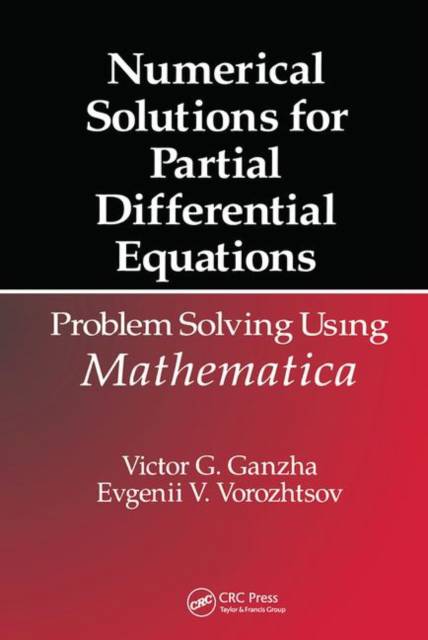
Numerical Solutions for Partial Differential Equations
Problem Solving Using Mathematica
Victor Grigor'e Ganzha, Evgenii Vasilev Vorozhtsov
Paperback | Engels
€ 134,45
+ 268 punten
Uitvoering
Omschrijving
This book describes the applications of Mathematica for the numerical solution of all classical types (hyperbolic, parabolic, and elliptic) of the partial differential equations of mathematical physics.
Specificaties
Betrokkenen
- Auteur(s):
- Uitgeverij:
Inhoud
- Aantal bladzijden:
- 347
- Taal:
- Engels
Eigenschappen
- Productcode (EAN):
- 9780367448509
- Verschijningsdatum:
- 2/12/2019
- Uitvoering:
- Paperback
- Formaat:
- Trade paperback (VS)
- Afmetingen:
- 156 mm x 234 mm
- Gewicht:
- 508 g


Alleen bij Standaard Boekhandel
+ 268 punten op je klantenkaart van Standaard Boekhandel
Cadeau

AANGERADEN


Beoordelingen
We publiceren alleen reviews die voldoen aan de voorwaarden voor reviews. Bekijk onze voorwaarden voor reviews.