


- Afhalen na 1 uur in een winkel met voorraad
- Gratis thuislevering in België vanaf € 30
- Ruim aanbod met 7 miljoen producten
- Afhalen na 1 uur in een winkel met voorraad
- Gratis thuislevering in België vanaf € 30
- Ruim aanbod met 7 miljoen producten





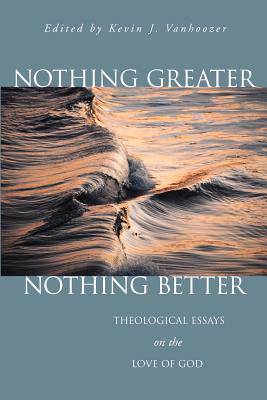
Nothing Greater, Nothing Better
Theological Essays on the Love of God
Paperback | Engels
€ 33,95
+ 67 punten
Eenvoudig bestellen
Veilig betalen


Gratis thuislevering vanaf € 30 (via bpost)
Gratis levering in je Standaard Boekhandel
Omschrijving
The love of God is arguably the most central doctrine of the Christian faith, and yet, remarkably, the subject of God's love has not received the attention it deserves. In Nothing Greater, Nothing Better an international team of distinguished theologians and biblical scholars admirably fills this need, offering clear and inspiring discussion of the nature of God's love and its implications for the Christian life. Kevin J. Vanhoozer begins the book by outlining the proper theological context of and main issues involved in meaningful talk about God's love today. Gary D. Badcock revisits the distinction between agape and eros, crafting a fresh understanding of these terms in relation to God's loving act in Christ. Geoffrey Grogan reviews the biblical evidence that ought to guide our thinking about God's love. Lewis Ayres examines Augustine's view of God's love as expressed in his commentary on 1 John and in his profound work on the Trinity. Trevor Hart examines the perils of using human language to speak of God, including attempts to fully grasp the concept of God's love. Alan J. Torrance looks for insight in the great Johannine assertion "God is love." Tony Lane queries the possibility of thinking about God's wrath and God's love together. Paul Helm asks whether God can love the world, turning, provocatively, to natural theology for an answer. David Fergusson takes up the vital eschatological concern: will the love of God ultimately triumph? The book closes with a sermon on Hosea 11 by Roy Clements that moves reflection on God's love from dogmatics to doxology. Though exploring the subject of God's love from many angles, these chapters are united in their understanding that it is not human love per se, but rather the love of the man Jesus -- representative both of God and of an authentic humanity -- that is the ultimate criterion for thinking about the love of God. Readers will find this volume both thought-provoking and spiritually uplifting.
Specificaties
Betrokkenen
- Uitgeverij:
Inhoud
- Aantal bladzijden:
- 224
- Taal:
- Engels
Eigenschappen
- Productcode (EAN):
- 9780802849021
- Verschijningsdatum:
- 1/09/2001
- Uitvoering:
- Paperback
- Formaat:
- Trade paperback (VS)
- Afmetingen:
- 152 mm x 229 mm
- Gewicht:
- 335 g

Alleen bij Standaard Boekhandel
+ 67 punten op je klantenkaart van Standaard Boekhandel
CADEAU

AANGERADEN


Beoordelingen
We publiceren alleen reviews die voldoen aan de voorwaarden voor reviews. Bekijk onze voorwaarden voor reviews.