


- Afhalen na 1 uur in een winkel met voorraad
- Gratis thuislevering in België vanaf € 30
- Ruim aanbod met 7 miljoen producten
- Afhalen na 1 uur in een winkel met voorraad
- Gratis thuislevering in België vanaf € 30
- Ruim aanbod met 7 miljoen producten





€ 34,95
+ 69 punten
Omschrijving
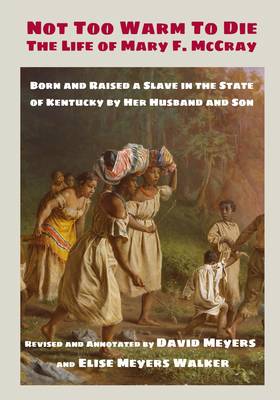
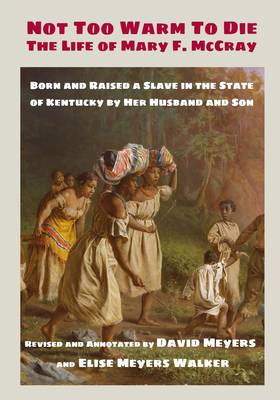
Three years following the death of Mary Francis McCray in 1895, her husband and younger son published an account of her extraordinary life. They hoped, as she had, that her story would serve as an example to others who were facing difficult times and had not yet come to know Jesus. It is a slim volume, just over 100 pages, and contains nearly every scrap of information available about this remarkable woman of faith. Yet, many questions remain unanswered. Perhaps that is to be expected for someone who began life as the property of another.
The Life of Mary F. McCray Born and Raised a Slave in the State of Kentucky by Her Husband and Son (full title) is, broadly speaking, a slave narrative, of which some 150 were published as books or pamphlets, not counting some 2,300 interviews conducted by the WPA. The most well-known are those of Frederick Douglass, William Wells Brown, Henry Bibb, Sojourner Truth, Harriet Tubman, Josiah Henderson, Solomon Northrup, Lewis and Milton Clarke, Harriet Jacobs, and William and Ellen Craft.
Many of them describe the horrors of slavery and the author's harrowing escape to freedom. But unlike Henry Bibb, who would claim that he was not so much "brought up" as "flogged up," Mary Francis - known familiarly as "Fanny" (or "Fannie") - did not feel that she had been especially mistreated by her mistress, a woman known as "Aunt Polly" Adams. And, while there was an element of suspense, she ultimately gained her freedom when the estate of her owner was probated. It just took a little time - over three years following the woman's passing. So, it is not so much for its portrayal of life under slavery, although there is that, but for life after slavery that her story invites attention. Too little has been written on this subject.
Unfortunately, Fanny was unable to write it herself. Like most enslaved people, she could neither read nor write. And as eager as she was to have her story told, there is nothing to indicate that she participated in any effort to do so. More than a few slave narratives were edited or even ghost written by others, but the writers generally worked side-by-side with their subjects in what is now called an "as told to" collaboration.
More than a century after Mary's story was initially published, David Meyers and Elise Meyers Walker, his daughter, have annotated, enlarged, and updated it, placing it in historical context. In doing so, they have uncovered many facts that either were omitted or were unknown at the time. As a result, Mary Francis Taylor emerges as a truly remarkable woman whose story deserves to receive wider recognition.
Specificaties
Betrokkenen
- Auteur(s):
- Uitgeverij:
Inhoud
- Aantal bladzijden:
- 274
- Taal:
- Engels
Eigenschappen
- Productcode (EAN):
- 9798991625364
- Verschijningsdatum:
- 11/09/2026
- Uitvoering:
- Paperback
- Formaat:
- Trade paperback (VS)
- Afmetingen:
- 178 mm x 254 mm
- Gewicht:
- 480 g


Alleen bij Standaard Boekhandel
+ 69 punten op je klantenkaart van Standaard Boekhandel
Cadeau

AANGERADEN


Beoordelingen
We publiceren alleen reviews die voldoen aan de voorwaarden voor reviews. Bekijk onze voorwaarden voor reviews.