


- Afhalen na 1 uur in een winkel met voorraad
- Gratis thuislevering in België vanaf € 30
- Ruim aanbod met 7 miljoen producten
- Afhalen na 1 uur in een winkel met voorraad
- Gratis thuislevering in België vanaf € 30
- Ruim aanbod met 7 miljoen producten





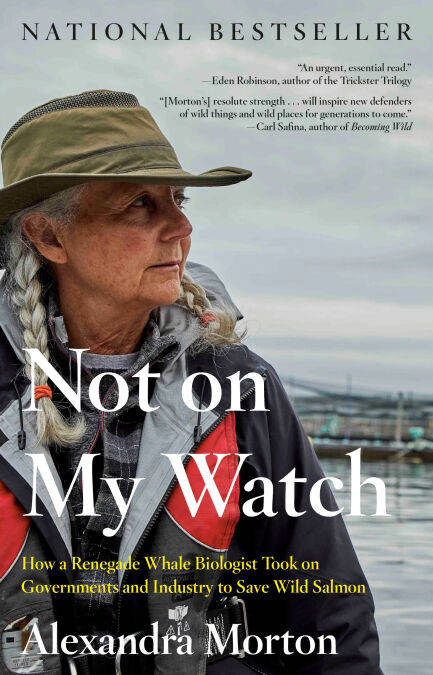
Not on My Watch E-BOOK
How a renegade whale biologist took on governments and industry to save wild salmon
Alexandra Morton
E-book | Engels
€ 15,77
+ 15 punten
Uitvoering
Omschrijving
NATIONAL BESTSELLER
Alexandra Morton has been called "the Jane Goodall of Canada" because of her passionate thirty-year fight to save British Columbia's wild salmon. Her account of that fight is both inspiring in its own right and a roadmap of resistance.
Alexandra Morton came north from California in the early 1980s, following her first love--the northern resident orca. In remote Echo Bay, in the Broughton Archipelago, she found the perfect place to settle into all she had ever dreamed of: a lifetime of observing and learning what these big-brained mammals are saying to each other. She was lucky enough to get there just in time to witness a place of true natural abundance, and learned how to thrive in the wilderness as a scientist and a single mother.
Then, in 1989, industrial aquaculture moved into the region, chasing the whales away. Her fisherman neighbours asked her if she would write letters on their behalf to government explaining the damage the farms were doing to the fisheries, and one thing led to another. Soon Alex had shifted her scientific focus to documenting the infectious diseases and parasites that pour from the ocean farm pens of Atlantic salmon into the migration routes of wild Pacific salmon, and then to proving their disastrous impact on wild salmon and the entire ecosystem of the coast.
Alex stood against the farms, first representing her community, then alone, and at last as part of an uprising that built around her as ancient Indigenous governance resisted a province and a country that wouldn't obey their own court rulings. She has used her science, many acts of protest and the legal system in her unrelenting efforts to save wild salmon and ultimately the whales--a story that reveals her own doggedness and bravery but also shines a bright light on the ways other humans doggedly resist the truth. Here, she brilliantly calls those humans to account for the sake of us all.
Alexandra Morton has been called "the Jane Goodall of Canada" because of her passionate thirty-year fight to save British Columbia's wild salmon. Her account of that fight is both inspiring in its own right and a roadmap of resistance.
Alexandra Morton came north from California in the early 1980s, following her first love--the northern resident orca. In remote Echo Bay, in the Broughton Archipelago, she found the perfect place to settle into all she had ever dreamed of: a lifetime of observing and learning what these big-brained mammals are saying to each other. She was lucky enough to get there just in time to witness a place of true natural abundance, and learned how to thrive in the wilderness as a scientist and a single mother.
Then, in 1989, industrial aquaculture moved into the region, chasing the whales away. Her fisherman neighbours asked her if she would write letters on their behalf to government explaining the damage the farms were doing to the fisheries, and one thing led to another. Soon Alex had shifted her scientific focus to documenting the infectious diseases and parasites that pour from the ocean farm pens of Atlantic salmon into the migration routes of wild Pacific salmon, and then to proving their disastrous impact on wild salmon and the entire ecosystem of the coast.
Alex stood against the farms, first representing her community, then alone, and at last as part of an uprising that built around her as ancient Indigenous governance resisted a province and a country that wouldn't obey their own court rulings. She has used her science, many acts of protest and the legal system in her unrelenting efforts to save wild salmon and ultimately the whales--a story that reveals her own doggedness and bravery but also shines a bright light on the ways other humans doggedly resist the truth. Here, she brilliantly calls those humans to account for the sake of us all.
Specificaties
Betrokkenen
- Auteur(s):
- Uitgeverij:
Inhoud
- Aantal bladzijden:
- 352
- Taal:
- Engels
Eigenschappen
- Productcode (EAN):
- 9780735279674
- Verschijningsdatum:
- 22/03/2021
- Uitvoering:
- E-book
- Beveiligd met:
- Adobe DRM
- Formaat:
- ePub


Alleen bij Standaard Boekhandel
+ 15 punten op je klantenkaart van Standaard Boekhandel
Cadeau

AANGERADEN


Beoordelingen
We publiceren alleen reviews die voldoen aan de voorwaarden voor reviews. Bekijk onze voorwaarden voor reviews.