


- Afhalen na 1 uur in een winkel met voorraad
- Gratis thuislevering in België vanaf € 30
- Ruim aanbod met 7 miljoen producten
- Afhalen na 1 uur in een winkel met voorraad
- Gratis thuislevering in België vanaf € 30
- Ruim aanbod met 7 miljoen producten





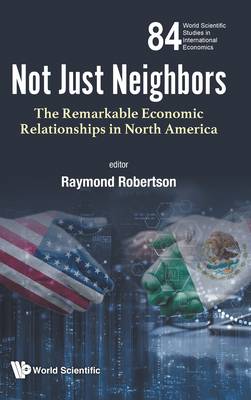
Not Just Neighbors: The Remarkable Economic Relationships in North America
Raymond Robertson
Hardcover | Engels
€ 213,45
+ 426 punten
Omschrijving
This book offers the most comprehensive account to date of how trade, migration, and labor markets have bound the United States and Mexico into one of the world's most deeply integrated economies. It highlights the supply chains that connect factories across borders, the workers whose livelihoods span two nations, and the shared opportunities and vulnerabilities that emerge from this unprecedented level of interdependence.At the heart of Not Just Neighbors is a clear argument: the US-Mexico relationship is not merely about proximity, but about the making of a single North American economy. Trade flows surpassing those with China, the planet's largest migration corridor, and cross-border industries from autos to agriculture all demonstrate how the fate of the two countries are linked.Drawing on decades of research, the book explains both the gains of integration -- competitiveness, efficiency, shared prosperity -- and the challenges it produces, such as inequality, dislocation, and political tensions.Written in a simple and an accessible manner, Not Just Neighbors is a timely and an essential reading for academics and policymakers, business leaders, and engaged citizens alike. It provides a roadmap for cooperative policies that can turn interdependence into a powerful engine of prosperity and security, while warning of the risks if this partnership is neglected.
Specificaties
Betrokkenen
- Auteur(s):
- Uitgeverij:
Inhoud
- Aantal bladzijden:
- 410
- Taal:
- Engels
Eigenschappen
- Productcode (EAN):
- 9789819825288
- Verschijningsdatum:
- 26/03/2026
- Uitvoering:
- Hardcover
- Formaat:
- Genaaid


Alleen bij Standaard Boekhandel
+ 426 punten op je klantenkaart van Standaard Boekhandel
AANGERADEN


Beoordelingen
We publiceren alleen reviews die voldoen aan de voorwaarden voor reviews. Bekijk onze voorwaarden voor reviews.