


- Afhalen na 1 uur in een winkel met voorraad
- Gratis thuislevering in België vanaf € 30
- Ruim aanbod met 7 miljoen producten
- Afhalen na 1 uur in een winkel met voorraad
- Gratis thuislevering in België vanaf € 30
- Ruim aanbod met 7 miljoen producten





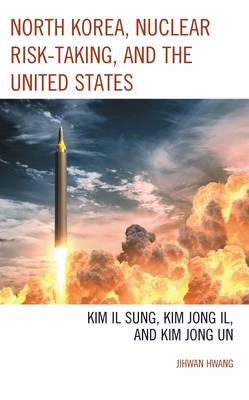
North Korea, Nuclear Risk-Taking, and the United States
Kim Il Sung, Kim Jong Il, and Kim Jong Un
Jihwan Hwang
€ 67,95
+ 135 punten
Uitvoering
Omschrijving
Jihwan Hwang analyzes Pyongyang's nuclear policy changes over the last three decades under Kim Il Sung, Kim Jong Il and Kim Jong Un. Why did a weaker North Korea take the risk of standing up against the much stronger U.S. with its nuclear weapons program, even escalating the crisis to the point of a war? Later, why did North Korea change its course of action amid the crisis even though the security environment remained essentially the same? Hwang draws on the main tenets of prospect theory in international relations and argues that Pyongyang becomes either risk-acceptant or risk-averse toward the U.S., depending on the situation it faces. When Pyongyang perceived the status quo to be deteriorating, it framed its situation as a loss and chose a risk-acceptant of confrontation to restore the status quo. Equally, when Pyongyang perceived the situation to be improving, it chose a risk-averse engagement in the domain of gain. In contrast, when Pyongyang perceived an extreme loss such as military confrontation against the United States, it would rather choose a risk-averse policy to avoid the catastrophic outcome of war. The issues of risk are central to an understanding of Pyongyang's nuclear policy decision-making.
Specificaties
Betrokkenen
- Auteur(s):
- Uitgeverij:
Inhoud
- Aantal bladzijden:
- 216
- Taal:
- Engels
- Reeks:
Eigenschappen
- Productcode (EAN):
- 9781793650283
- Verschijningsdatum:
- 19/02/2026
- Uitvoering:
- Paperback
- Formaat:
- Trade paperback (VS)
- Afmetingen:
- 152 mm x 229 mm
- Gewicht:
- 299 g


Alleen bij Standaard Boekhandel
+ 135 punten op je klantenkaart van Standaard Boekhandel
Cadeau

AANGERADEN


Beoordelingen
We publiceren alleen reviews die voldoen aan de voorwaarden voor reviews. Bekijk onze voorwaarden voor reviews.