


- Afhalen na 1 uur in een winkel met voorraad
- Gratis thuislevering in België vanaf € 30
- Ruim aanbod met 7 miljoen producten
- Afhalen na 1 uur in een winkel met voorraad
- Gratis thuislevering in België vanaf € 30
- Ruim aanbod met 7 miljoen producten





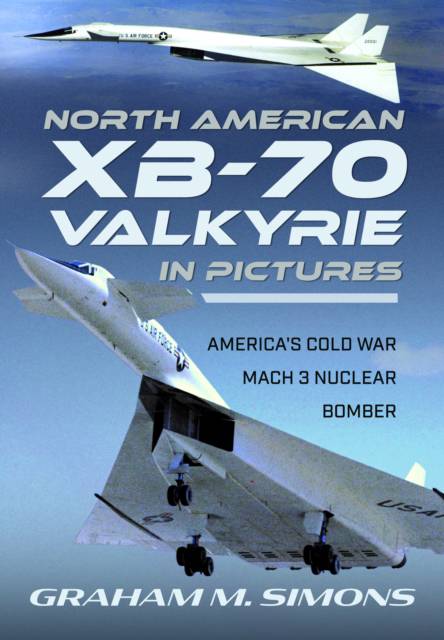
North American Xb-70 Valkyrie in Pictures
America's Cold War Mach 3 Nuclear Bomber
Graham M Simons
Hardcover | Engels
€ 34,95
+ 69 punten
Omschrijving
Flying at 70,000 feet, carrying nuclear weapons at Mach 3+ for thousands of miles, the North American Aviation XB-70 Valkyrie was not merely going to redefine military aviation, but the very nature of warfare itself. The XB-70 flew so fast and so high it would only appear on radar screens for a fleeting moment, making it impossible for enemy controllers to direct their interceptors to the target before it flew out of range.
When it was first designed in the 1950s, the enemy, meaning at the time the Soviet Union, had no aircraft that could match the XB-70's capabilities, rendering it almost invulnerable. But, just as the US was developing its technologies, so too were the Soviets.
The introduction of their first surface-to-air missiles led to the US adopting low-level missions to sneak under radar. This effectively neutralised the XB-70's main characteristics and, ultimately, the programme, which had cost the United States a staggering $800 million, the equivalent to $8.4 billion in modern terms, was cancelled.
In this book, the renowned aviation historian and author Graham M. Simons explores the full story of the development of this remarkable supersonic bomber through a unique collection of images. He reveals the many challenges that the North American engineers faced, particularly with regards to engines and fuel, all of which are fully explained.
As well as the technical and operational characteristics of the XB-70, Mr Simons includes first-hand testimony and analyses the accidents and incidents the aircraft were involved in. A detailed timetable allows the reader to comprehend the XB-70's protracted history.
A beautifully elegant machine, just two of the ground-breaking XB-70s were produced, the first flight taking place on 21 September 1964. In this magnificent, full colour book this unique supersonic aircraft can be seen in all its glory.
When it was first designed in the 1950s, the enemy, meaning at the time the Soviet Union, had no aircraft that could match the XB-70's capabilities, rendering it almost invulnerable. But, just as the US was developing its technologies, so too were the Soviets.
The introduction of their first surface-to-air missiles led to the US adopting low-level missions to sneak under radar. This effectively neutralised the XB-70's main characteristics and, ultimately, the programme, which had cost the United States a staggering $800 million, the equivalent to $8.4 billion in modern terms, was cancelled.
In this book, the renowned aviation historian and author Graham M. Simons explores the full story of the development of this remarkable supersonic bomber through a unique collection of images. He reveals the many challenges that the North American engineers faced, particularly with regards to engines and fuel, all of which are fully explained.
As well as the technical and operational characteristics of the XB-70, Mr Simons includes first-hand testimony and analyses the accidents and incidents the aircraft were involved in. A detailed timetable allows the reader to comprehend the XB-70's protracted history.
A beautifully elegant machine, just two of the ground-breaking XB-70s were produced, the first flight taking place on 21 September 1964. In this magnificent, full colour book this unique supersonic aircraft can be seen in all its glory.
Specificaties
Betrokkenen
- Auteur(s):
- Uitgeverij:
Inhoud
- Aantal bladzijden:
- 320
- Taal:
- Engels
Eigenschappen
- Productcode (EAN):
- 9781526787279
- Verschijningsdatum:
- 30/05/2026
- Uitvoering:
- Hardcover
- Formaat:
- Genaaid
- Afmetingen:
- 171 mm x 248 mm


Alleen bij Standaard Boekhandel
+ 69 punten op je klantenkaart van Standaard Boekhandel
AANGERADEN


Beoordelingen
We publiceren alleen reviews die voldoen aan de voorwaarden voor reviews. Bekijk onze voorwaarden voor reviews.