


- Afhalen na 1 uur in een winkel met voorraad
- Gratis thuislevering in België vanaf € 30
- Ruim aanbod met 7 miljoen producten
- Afhalen na 1 uur in een winkel met voorraad
- Gratis thuislevering in België vanaf € 30
- Ruim aanbod met 7 miljoen producten




€ 40,45
+ 80 punten
Omschrijving
"I'm a longtime admirer of Casemate's Illustrated series. As always, Casemate's choice of photographs are of a high standard and accompanied with some useful maps. Another highly recommended addition to the library." - History Book Chat
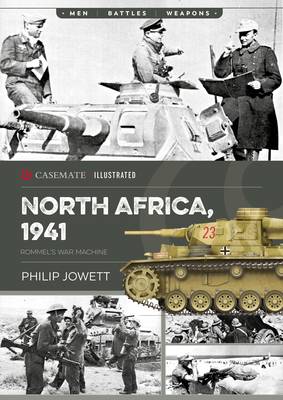
As 1941 dawned, the British were mopping up the last Italian strongholds in Libya after seven months of fighting. The outnumbered British Western Desert force of 30,000 men had effectively defeated an Italian force of 250,000. The British had captured hundreds of thousands of Italian soldiers, plus hundreds of tanks and artillery pieces and several thousand valuable trucks, and pushed the Italians out of Egypt and then across the coastline of Libya until they controlled only a small section of western Libya.
In response to this collapse, Adolf Hitler intervened, sending the Afrika Korps under General Erwin Rommel to reinforce Mussolini's struggling forces. From March to December 1941, German and Italian troops clashed with the British Commonwealth forces in a series of major battles. Despite limited resources, Rommel's tactical prowess allowed him to outmaneuver the British, launching rapid offensives that pushed them back into western Egypt. The British, determined to protect the Suez Canal, mounted their own counteroffensives--Operations Brevity, Battleaxe, and Crusader--but struggled to gain the upper hand.
A key flashpoint was the port of Tobruk--the only major port in the theater still held by the British. Besieged for much of 1941, its defenders withstood repeated Axis assaults, preventing Rommel from securing a crucial supply hub. By the end of the year, both sides had suffered heavy losses, and the campaign ended in a stalemate, setting the stage for further clashes in 1942.
Featuring over 150 photographs, detailed maps, and artwork, this book provides an in-depth look at the soldiers, strategies, and shifting tides of the 1941 desert war.
As 1941 dawned, the British were mopping up the last Italian strongholds in Libya after seven months of fighting. The outnumbered British Western Desert force of 30,000 men had effectively defeated an Italian force of 250,000. The British had captured hundreds of thousands of Italian soldiers, plus hundreds of tanks and artillery pieces and several thousand valuable trucks, and pushed the Italians out of Egypt and then across the coastline of Libya until they controlled only a small section of western Libya.
In response to this collapse, Adolf Hitler intervened, sending the Afrika Korps under General Erwin Rommel to reinforce Mussolini's struggling forces. From March to December 1941, German and Italian troops clashed with the British Commonwealth forces in a series of major battles. Despite limited resources, Rommel's tactical prowess allowed him to outmaneuver the British, launching rapid offensives that pushed them back into western Egypt. The British, determined to protect the Suez Canal, mounted their own counteroffensives--Operations Brevity, Battleaxe, and Crusader--but struggled to gain the upper hand.
A key flashpoint was the port of Tobruk--the only major port in the theater still held by the British. Besieged for much of 1941, its defenders withstood repeated Axis assaults, preventing Rommel from securing a crucial supply hub. By the end of the year, both sides had suffered heavy losses, and the campaign ended in a stalemate, setting the stage for further clashes in 1942.
Featuring over 150 photographs, detailed maps, and artwork, this book provides an in-depth look at the soldiers, strategies, and shifting tides of the 1941 desert war.
Specificaties
Betrokkenen
- Auteur(s):
- Uitgeverij:
Inhoud
- Aantal bladzijden:
- 151
- Taal:
- Engels
- Reeks:
Eigenschappen
- Productcode (EAN):
- 9781636245782
- Verschijningsdatum:
- 15/05/2026
- Uitvoering:
- Paperback
- Formaat:
- Trade paperback (VS)
- Afmetingen:
- 178 mm x 254 mm
- Gewicht:
- 417 g


Alleen bij Standaard Boekhandel
+ 80 punten op je klantenkaart van Standaard Boekhandel
Cadeau

AANGERADEN


Beoordelingen
We publiceren alleen reviews die voldoen aan de voorwaarden voor reviews. Bekijk onze voorwaarden voor reviews.