


- Afhalen na 1 uur in een winkel met voorraad
- Gratis thuislevering in België vanaf € 30
- Ruim aanbod met 7 miljoen producten
- Afhalen na 1 uur in een winkel met voorraad
- Gratis thuislevering in België vanaf € 30
- Ruim aanbod met 7 miljoen producten





€ 48,45
+ 96 punten
Eenvoudig bestellen
Veilig betalen


Gratis thuislevering vanaf € 30 (via bpost)
Gratis levering in je Standaard Boekhandel
Omschrijving
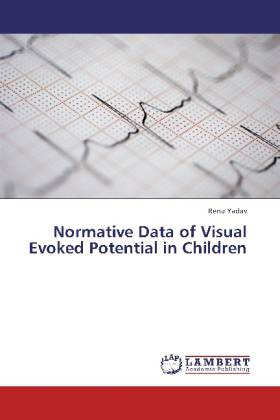
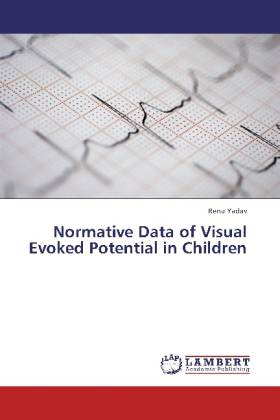
The VEPs represent electrical activity of large populations of neurons in the visual cortex and test the function of the visual pathway from the retina to the occipital cortex. Visual evoked potentials are massed electrical signals generated by occipital cortical areas in response to visual stimulation. Evoked potential techniques are noninvasive and have excellent temporal resolution, thus permitting the study of dynamic changes occurring in the nervous system. The evoked electrophysiological potential of VEP can be extracted using signal averaging from the electroencephalographic activity recorded at the scalp. VEPs can be used to assess the integrity or maturational state of the visual pathway in infants and preverbal children. The VEP responses have been worked out for adult population. However, in children the recording is difficult and their normatives are not consistent across the studies. The effect of age on children VEP is even less worked out. Therefore, this study is an attempt to document VEP responses among children population from 0.5 years to 7 years. This study is likely to produce a preliminary normative for the children and a pattern of effect of age on VEP.
Specificaties
Betrokkenen
- Auteur(s):
- Uitgeverij:
Inhoud
- Aantal bladzijden:
- 84
- Taal:
- Engels
Eigenschappen
- Productcode (EAN):
- 9783659321061
- Verschijningsdatum:
- 20/02/2013
- Uitvoering:
- Paperback
- Afmetingen:
- 150 mm x 220 mm
- Gewicht:
- 136 g


Alleen bij Standaard Boekhandel
+ 96 punten op je klantenkaart van Standaard Boekhandel
CADEAU

AANGERADEN


Beoordelingen
We publiceren alleen reviews die voldoen aan de voorwaarden voor reviews. Bekijk onze voorwaarden voor reviews.