


- Afhalen na 1 uur in een winkel met voorraad
- Gratis thuislevering in België vanaf € 30
- Ruim aanbod met 7 miljoen producten
- Afhalen na 1 uur in een winkel met voorraad
- Gratis thuislevering in België vanaf € 30
- Ruim aanbod met 7 miljoen producten





€ 32,45
+ 64 punten
Omschrijving
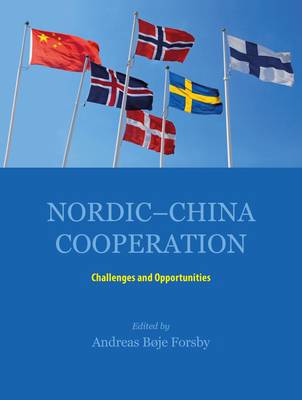
For all the Nordic countries, China has become an important trading partner. It also plays a central role in the management of the international order on which the Nordic states are highly dependent. At the same time, the Nordic countries risk being drawn into the unfolding great power struggle between the United States and China. For China, the Nordic region is not a major economic partner nor is it closely affiliated with China's Belt & Road Initiative. Even so, Nordic expertise, technology and innovation skills are in high demand in China, especially with respect to green growth and sustainable development solutions that are critical to China's overall modernization objectives. Against this backdrop of existing interconnectivities and mutual interests, there is a need to take a closer look at Sino-Nordic relations in order to identify the opportunities as well as constraints for advancing the relationship further. This pioneering study investigates the relationship, exploring the range of interconnectivities and collaborative practices between China and its Nordic partners. It maps the scope and recent history of current relations across various dimensions, not only from an overall comparative perspective but also from the perspectives of the individual countries. The study also focuses on five issue areas - business and innovation, sustainable development, research and education, welfare solutions and people-to-people relations - where opportunities exist for enhanced cooperation. At the same time, it identifies the main obstacles and challenges to Sino-Nordic relations, including differences of political values and the burgeoning US- China great power rivalry. Furthermore, by examining the rather limited measures taken by the Nordic countries to adopt a joint approach to China, it discusses the extent to which such a joint approach might augment bilateral relations that individual Nordic countries have with Beijing as well as wider EU-China relations. Finally, the study ends with a set of thought-provoking recommendations for how to deal with current opportunities and constraints in order to expand and deepen the Sino-Nordic relationship.
Specificaties
Betrokkenen
- Uitgeverij:
Inhoud
- Aantal bladzijden:
- 141
- Taal:
- Engels
- Reeks:
Eigenschappen
- Productcode (EAN):
- 9788776942779
- Verschijningsdatum:
- 1/04/2021
- Uitvoering:
- Paperback
- Formaat:
- Trade paperback (VS)
- Afmetingen:
- 147 mm x 209 mm
- Gewicht:
- 453 g

Alleen bij Standaard Boekhandel
+ 64 punten op je klantenkaart van Standaard Boekhandel
Cadeau

AANGERADEN


Beoordelingen
We publiceren alleen reviews die voldoen aan de voorwaarden voor reviews. Bekijk onze voorwaarden voor reviews.