


- Afhalen na 1 uur in een winkel met voorraad
- Gratis thuislevering in België vanaf € 30
- Ruim aanbod met 7 miljoen producten
- Afhalen na 1 uur in een winkel met voorraad
- Gratis thuislevering in België vanaf € 30
- Ruim aanbod met 7 miljoen producten





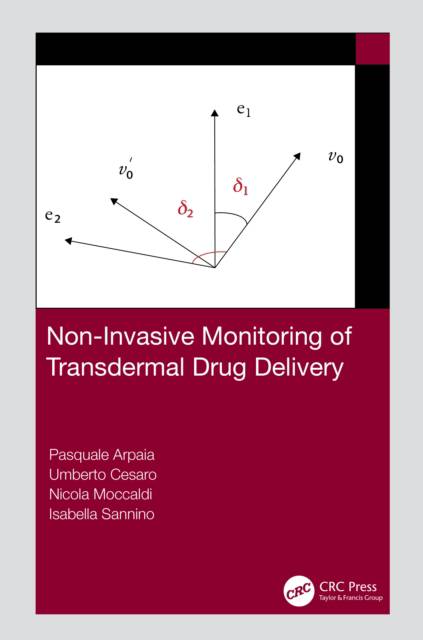
Non-Invasive Monitoring of Transdermal Drug Delivery
Pasquale Arpaia, Umberto Cesaro, Nicola Moccaldi, Isabella Sannino
Hardcover | Engels
€ 305,45
+ 610 punten
Omschrijving
The book presents an innovative technology based on injection of a very weak current to trace the quantity of a drug carried immediately after the administration. The book makes the reader familiar with the technology, from the conception through the design of the instrument, up to the preliminary clinical applications. In the first chapter, the method of transdermal drug delivery and the use of impedance spectroscopy in the dermatological field are presented. The second chapter describes a screening measurement campaign aimed at proving the feasibility of the assessment method and identifying the bandwidth of interest. The prototyping, validation and characterization of an instrument to measure the amount of drug delivered (DUSM: Drug Under Skin Meter) are presented in chapter three. In the fourth chapter three experimental campaigns, based on the electrical analysis of the biological tissue behavior due to the drug delivery, are reported: (i) laboratory emulation on eggplants, (ii) ex-vivo tests on pig ears, and finally (iii) in-vivo tests on human volunteers. In the fifth chapter a behavioral model, based on Finite Elements and Partial Differential Equation, of an impedance-based measurement system for assessing the drug released under the skin, during transdermal delivering, is proposed. The last chapter is dedicated to present a campaign in order to prove the suitability for insulin therapy applications. This book is intended for biomedical engineers, biomedical engineering students, operators working in the field of biomedical instrumentation, biotechnologists, and technicians of transdermal vehiculation.
Specificaties
Betrokkenen
- Auteur(s):
- Uitgeverij:
Inhoud
- Aantal bladzijden:
- 174
- Taal:
- Engels
Eigenschappen
- Productcode (EAN):
- 9780367765989
- Verschijningsdatum:
- 24/03/2022
- Uitvoering:
- Hardcover
- Formaat:
- Genaaid
- Afmetingen:
- 156 mm x 234 mm
- Gewicht:
- 462 g


Alleen bij Standaard Boekhandel
+ 610 punten op je klantenkaart van Standaard Boekhandel
Cadeau

AANGERADEN


Beoordelingen
We publiceren alleen reviews die voldoen aan de voorwaarden voor reviews. Bekijk onze voorwaarden voor reviews.