


- Afhalen na 1 uur in een winkel met voorraad
- Gratis thuislevering in België vanaf € 30
- Ruim aanbod met 7 miljoen producten
- Afhalen na 1 uur in een winkel met voorraad
- Gratis thuislevering in België vanaf € 30
- Ruim aanbod met 7 miljoen producten





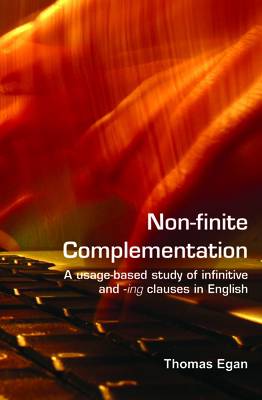
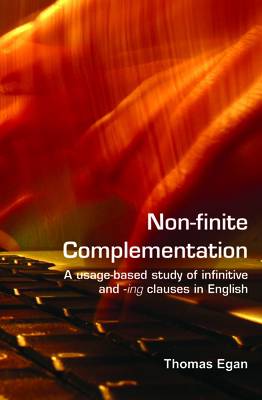
Non-Finite Complementation
A Usage-Based Study of Infinitive and -Ing Clauses in English
Thomas Egan
€ 94,70
+ 189 punten
Omschrijving
This book presents a comprehensive guide to the way speakers of British English use infinitive and -ing clauses as verbal complements. It contains details of the non-finite complementation patterns of over 300 matrix verbs, with a particular emphasis on verbs that occur with more than one type of non-finite complement. Drawing upon data from the British National Corpus, the author shows that some of the views which are to be found in the existing literature on these sorts of clauses are in conflict with the evidence of actual usage. He also shows that there is actually much more regularity in this area than has often been taken to be the case. Moreover, this regularity is shown to be motivated by cognitive-functional factors. An appendix contains details of the relative frequency of all of the constructions dealt with in the study, together with an example of each of them. The book is of interest to language teachers as well as linguists, both theoretical and applied.
Specificaties
Betrokkenen
- Auteur(s):
- Uitgeverij:
Inhoud
- Aantal bladzijden:
- 432
- Taal:
- Engels
- Reeks:
- Reeksnummer:
- nr. 65
Eigenschappen
- Productcode (EAN):
- 9789042023598
- Verschijningsdatum:
- 1/01/2008
- Uitvoering:
- Hardcover
- Formaat:
- Genaaid
- Afmetingen:
- 152 mm x 229 mm
- Gewicht:
- 825 g


Alleen bij Standaard Boekhandel
+ 189 punten op je klantenkaart van Standaard Boekhandel
Cadeau

AANGERADEN


Beoordelingen
We publiceren alleen reviews die voldoen aan de voorwaarden voor reviews. Bekijk onze voorwaarden voor reviews.