


- Afhalen na 1 uur in een winkel met voorraad
- Gratis thuislevering in België vanaf € 30
- Ruim aanbod met 7 miljoen producten
- Afhalen na 1 uur in een winkel met voorraad
- Gratis thuislevering in België vanaf € 30
- Ruim aanbod met 7 miljoen producten




Omschrijving
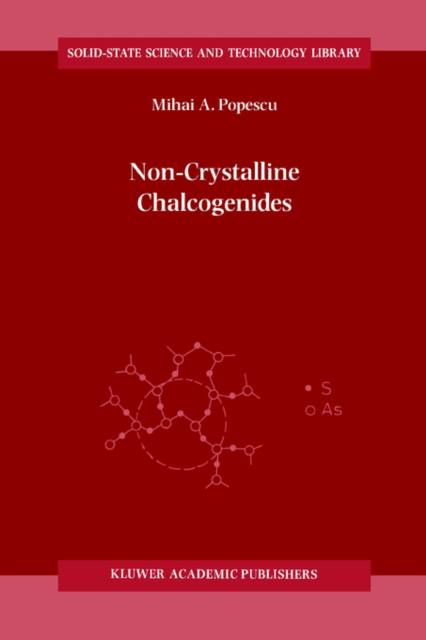
The earliest experimental data on an oxygen-free glass have been published by Schulz-Sellack in 1870 [1]. Later on, in 1902, Wood [2], as well as Meier in 1910 [3], carried out the first researches on the optical properties of vitreous selenium. The interest in the glasses that exhibit transparency in the infrared region of the optical spectrum rose at the beginning of the twentieth century. Firstly were investigated the heavy metal oxides and the transparency limit was extended from (the case of the classical oxide glasses) up to wavelength. In order to extend this limit above the scientists tried the chemical compositions based on the elements of the sixth group of the Periodic Table, the chalcogens: sulphur, selenium and tellurium. The systematic research in the field of glasses based on chalcogens, called chalcogenide glasses, started at the middle of our century. In 1950 Frerichs [4] investigated the glass and published the paper: "New optical glasses transparent in infrared up to 12 . Several years later he started the study of the selenium glass and prepared several binary glasses with sulphur [5]. Glaze and co-workers [6] developed in 1957 the first method for the preparation of the glass at the industrial scale, while Winter-Klein [7] published reports on numerous chalcogenides prepared in the vitreous state.
Specificaties
Betrokkenen
- Auteur(s):
- Uitgeverij:
Inhoud
- Aantal bladzijden:
- 378
- Taal:
- Engels
- Reeks:
- Reeksnummer:
- nr. 8
Eigenschappen
- Productcode (EAN):
- 9781402003592
- Verschijningsdatum:
- 30/11/2001
- Uitvoering:
- Paperback
- Formaat:
- Trade paperback (VS)
- Afmetingen:
- 156 mm x 234 mm
- Gewicht:
- 557 g



Alleen bij Standaard Boekhandel
+ 307 punten op je klantenkaart van Standaard Boekhandel
Wedstrijd


Beoordelingen
We publiceren alleen reviews die voldoen aan de voorwaarden voor reviews. Bekijk onze voorwaarden voor reviews.