


- Afhalen na 1 uur in een winkel met voorraad
- Gratis thuislevering in België vanaf € 30
- Ruim aanbod met 7 miljoen producten
- Afhalen na 1 uur in een winkel met voorraad
- Gratis thuislevering in België vanaf € 30
- Ruim aanbod met 7 miljoen producten





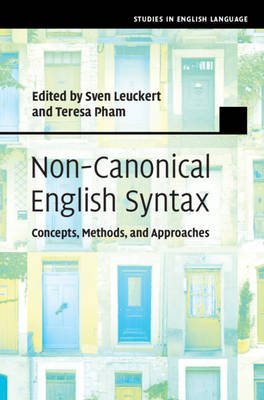
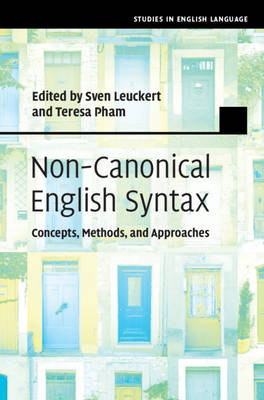
Non-Canonical English Syntax
Concepts, Methods, and Approaches
€ 216,45
+ 432 punten
Omschrijving
The term non-canonical syntax generally refers to deviations from 'typical' word order. These represent a fascinating phenomenon in natural language use. With contributions from a team of renowned scholars, this book presents a range of case-studies on non-canonical syntax across historical, register-based, and non-native varieties of English. Each chapter investigates a different non-canonical construction and assesses to what extent it can be called 'non-canonical' in a theory-based and frequency-based understanding of non-canonical syntax. A range of state-of-the-art methodologies are used, highlighting that an empirical approach to non-canonical syntactic constructions is particularly fruitful. An introduction, a synopsis, a terminological chapter, and three section introductions frame the case studies and present overviews of the theory behind non-canonical syntax and previous work, while also illustrating open questions and opportunities for future research. The volume is essential reading for advanced students of English grammar and researchers working on non-canonical syntax and syntactic variation. This title is also available as Open Access on Cambridge Core.
Specificaties
Betrokkenen
- Uitgeverij:
Inhoud
- Aantal bladzijden:
- 364
- Taal:
- Engels
- Reeks:
Eigenschappen
- Productcode (EAN):
- 9781108836128
- Verschijningsdatum:
- 28/08/2025
- Uitvoering:
- Hardcover
- Formaat:
- Genaaid
- Afmetingen:
- 152 mm x 229 mm
- Gewicht:
- 653 g

Alleen bij Standaard Boekhandel
+ 432 punten op je klantenkaart van Standaard Boekhandel
Cadeau

AANGERADEN


Beoordelingen
We publiceren alleen reviews die voldoen aan de voorwaarden voor reviews. Bekijk onze voorwaarden voor reviews.