


- Afhalen na 1 uur in een winkel met voorraad
- Gratis thuislevering in België vanaf € 30
- Ruim aanbod met 7 miljoen producten
- Afhalen na 1 uur in een winkel met voorraad
- Gratis thuislevering in België vanaf € 30
- Ruim aanbod met 7 miljoen producten





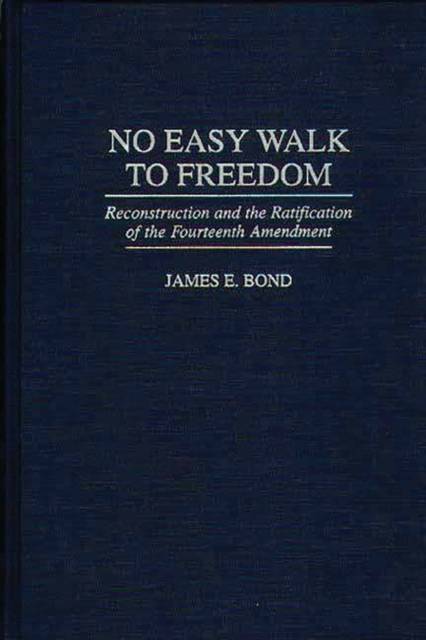
No Easy Walk to Freedom
Reconstruction and the Ratification of the Fourteenth Amendment
James E Bond
€ 169,95
+ 339 punten
Omschrijving
The Southern ratification debate on the 14th Amendment was a part of the bitter, decade-long struggle to reconstruct and later redeem the South. This book makes clear that amidst all the conflict and cacophony of the period, the commands of the 14th Amendment were widely and uniformly understood. The three great clauses of Section 1 of the 14th Amendment were intended both to guarantee everyone the fundamental rights of citizenship and personhood and to nationalize the protection of those rights within the federal structure ordained by the Constitution. That means that the states were to retain primary responsibility for defining and protecting those rights, subject only to the requirement that they treat all fairly and equally. Rooted in the natural rights philosophy of the Declaration of Independence rather than in the text of the Bill of Rights, the commands of the 14th Amendment were intended to protect liberty in an inseparable union of states. This study lets the participants in these events speak for themselves: in official reports; in party platforms and campaign speeches; in resolutions from meetings, rallies, and conventions; in editorials and letters to the editor; and in private diaries and personal correspondence. Much of the documentary evidence in this book is being published for the first time.
Specificaties
Betrokkenen
- Auteur(s):
- Uitgeverij:
Inhoud
- Aantal bladzijden:
- 312
- Taal:
- Engels
- Reeks:
Eigenschappen
- Productcode (EAN):
- 9780275957032
- Verschijningsdatum:
- 28/05/1997
- Uitvoering:
- Hardcover
- Formaat:
- Genaaid
- Afmetingen:
- 163 mm x 243 mm
- Gewicht:
- 657 g


Alleen bij Standaard Boekhandel
+ 339 punten op je klantenkaart van Standaard Boekhandel
Cadeau

AANGERADEN


Beoordelingen
We publiceren alleen reviews die voldoen aan de voorwaarden voor reviews. Bekijk onze voorwaarden voor reviews.