


- Afhalen na 1 uur in een winkel met voorraad
- Gratis thuislevering in België vanaf € 30
- Ruim aanbod met 7 miljoen producten
- Afhalen na 1 uur in een winkel met voorraad
- Gratis thuislevering in België vanaf € 30
- Ruim aanbod met 7 miljoen producten





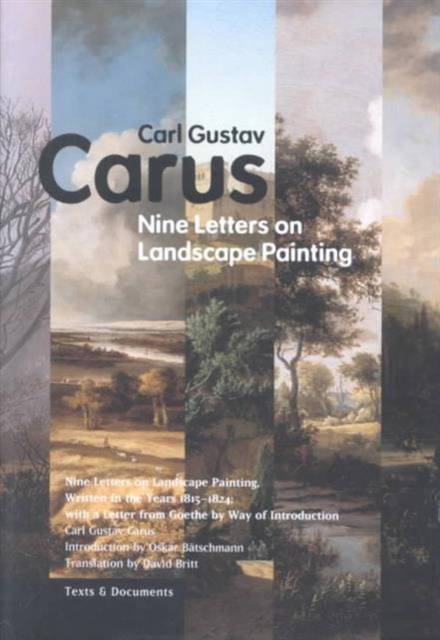
Nine Letters on Landscape Painting
Written in the Years 1815-1824, with a Letter from Goethe by Way of Introduction
Carl Gustav Carus, David Britt
€ 40,95
+ 81 punten
Omschrijving
Carl Gustav Carus (1789-1869)--court physician to the king of Saxony--was a naturalist, amateur painter, and theoretician of landscape painting whose Nine Letters on Landscape Painting is an important document of early German romanticism and an elegant appeal for the integration of art and science.
Carus was inspired by and had contacts with the greatest German intellectuals of his day. Carus prefaced his work with a letter from his correspondence with Johann Wolfgang von Goethe, who was his primary mentor in both science and art. His writings also reflect, however, the influence of the German natural philosopher Friedrich Wilhelm Joseph Schelling, especially Schelling's notion of a world soul, and the writings of the naturalist and explorer Alexander von Humboldt. Carus played a role in the revolution in landscape painting taking place in Saxony around Caspar David Friedrich. The first edition appears here in English for the first time.
Carus was inspired by and had contacts with the greatest German intellectuals of his day. Carus prefaced his work with a letter from his correspondence with Johann Wolfgang von Goethe, who was his primary mentor in both science and art. His writings also reflect, however, the influence of the German natural philosopher Friedrich Wilhelm Joseph Schelling, especially Schelling's notion of a world soul, and the writings of the naturalist and explorer Alexander von Humboldt. Carus played a role in the revolution in landscape painting taking place in Saxony around Caspar David Friedrich. The first edition appears here in English for the first time.
Specificaties
Betrokkenen
- Auteur(s):
- Uitgeverij:
Inhoud
- Aantal bladzijden:
- 200
- Taal:
- Engels
- Reeks:
Eigenschappen
- Productcode (EAN):
- 9780892366743
- Verschijningsdatum:
- 26/12/2002
- Uitvoering:
- Paperback
- Formaat:
- Trade paperback (VS)
- Afmetingen:
- 178 mm x 260 mm
- Gewicht:
- 494 g


Alleen bij Standaard Boekhandel
+ 81 punten op je klantenkaart van Standaard Boekhandel
Cadeau

AANGERADEN


Beoordelingen
We publiceren alleen reviews die voldoen aan de voorwaarden voor reviews. Bekijk onze voorwaarden voor reviews.