


- Afhalen na 1 uur in een winkel met voorraad
- Gratis thuislevering in België vanaf € 30
- Ruim aanbod met 7 miljoen producten
- Afhalen na 1 uur in een winkel met voorraad
- Gratis thuislevering in België vanaf € 30
- Ruim aanbod met 7 miljoen producten




€ 67,95
+ 135 punten
Uitvoering
Omschrijving
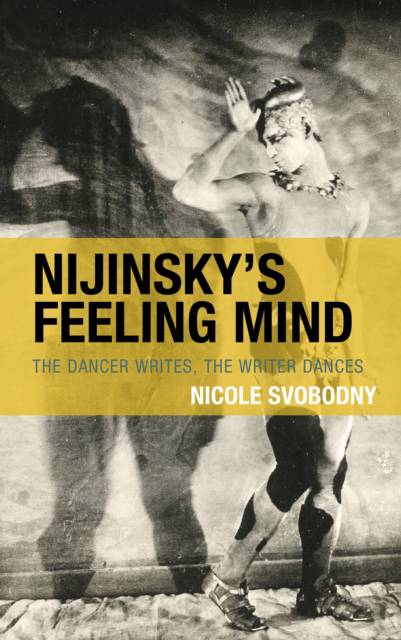
Nijinsky's Feeling Mind: The Dancer Writes, The Writer Dances is the first in-depth literary study of Vaslav Nijinsky's life-writing. Through close textual analysis combined with intellectual biography and literary theory, Nicole Svobodny puts the spotlight on Nijinsky as reader. She elucidates Nijinsky's riffs on Tolstoy, Dostoevsky, and Nietzsche, equating these intertextual connections to "marking" a dance, whereby the dancer uses a reduction strategy situated between thinking and doing. By exploring the intersections of bodily movement with verbal language, this book addresses broader questions of how we sense and make sense of our worlds. Drawing on archival research, along with studies in psychology and philosophy, Svobodny emphasizes the modernist contexts from which the dancer-writer emerged at the end of World War I. Nijinsky began his life-writing-a book he titled Feeling-the day after the Paris Peace Conference opened, and the same day he performed his "last dance." Nijinsky's Feeling Mind begins with the dancer on stage and concludes as he invites readers into his private room. Illuminating the structure, plot, medium, and mode of Feeling, this study calls on readers to grapple with a paradox: the more the dancer insists on his writing as a live performance, the more he points to the material object that entombs it.
Specificaties
Betrokkenen
- Auteur(s):
- Uitgeverij:
Inhoud
- Aantal bladzijden:
- 386
- Taal:
- Engels
- Reeks:
Eigenschappen
- Productcode (EAN):
- 9781793653550
- Verschijningsdatum:
- 30/04/2026
- Uitvoering:
- Paperback
- Formaat:
- Trade paperback (VS)
- Afmetingen:
- 152 mm x 229 mm
- Gewicht:
- 512 g


Alleen bij Standaard Boekhandel
+ 135 punten op je klantenkaart van Standaard Boekhandel
AANGERADEN


Beoordelingen
We publiceren alleen reviews die voldoen aan de voorwaarden voor reviews. Bekijk onze voorwaarden voor reviews.