


- Afhalen na 1 uur in een winkel met voorraad
- Gratis thuislevering in België vanaf € 30
- Ruim aanbod met 7 miljoen producten
- Afhalen na 1 uur in een winkel met voorraad
- Gratis thuislevering in België vanaf € 30
- Ruim aanbod met 7 miljoen producten





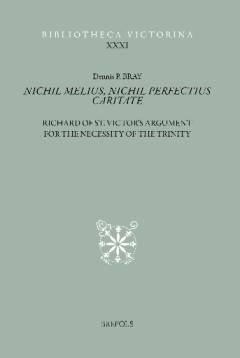
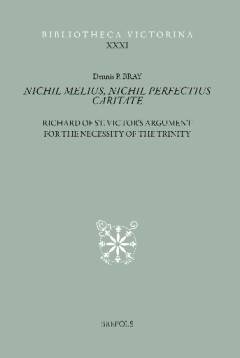
Nichil melius, nichil perfectius caritate
Dennis Bray
€ 79,50
+ 159 punten
Omschrijving
In his magnum opus De Trinitate, the twelfth-century canon Richard of St. Victor offers sustained reflection on core dogmatic claims from the Athanasian creed. At the heart of the treatise is Richard's argument for exactly three divine persons. Starting with the necessity of a single, maximally perfect divine substance, Richard reasons along four steps: (i) God must have maximal charity, or other-love; (ii) to be perfectly good, delightful, and glorious, God's other-love must be shared among at least two, and (iii) among at least three, divine persons; (iv) the metaphysics of divine processions and love each ensure the impossibility of four divine persons. Scripture and trustworthy church authorities already give Richard certainty in these truths of faith. Even so, as an act of ardent love, Richard contemplates the Trinity as reflected in creation. From this epistemic point of departure, he supports his conclusions from common human experience alone. Recently, philosophers of religion have employed Richard's trinitarian reflection as a springboard for constructive work in apologetics and ramified natural theology. His unique and meticulous approach to the Trinity has garnered attention from scholars of medieval and Victorine studies, recognizing the novelty and rigour of his philosophical theology. This volume presents the first focused exploration of Richard's central thesis in De Trinitate, combining historical context with philosophical scrutiny. It confronts the most challenging aspects of his argument, presenting Richard's insights as not merely intriguing but also profoundly compelling. His thesis, if validated, promises to significantly enrich modern dialogues on the philosophical and theological dimensions of the Trinity.
Specificaties
Betrokkenen
- Auteur(s):
- Uitgeverij:
Inhoud
- Aantal bladzijden:
- 280
- Taal:
- Frans
- Reeks:
- Reeksnummer:
- nr. 31
Eigenschappen
- Productcode (EAN):
- 9782503613444
- Verschijningsdatum:
- 05/09/2025
- Uitvoering:
- Hardcover
- Formaat:
- Genaaid
- Gewicht:
- 1147 g


Alleen bij Standaard Boekhandel
+ 159 punten op je klantenkaart van Standaard Boekhandel
Cadeau

AANGERADEN


Beoordelingen
We publiceren alleen reviews die voldoen aan de voorwaarden voor reviews. Bekijk onze voorwaarden voor reviews.