



Bedankt voor het vertrouwen het afgelopen jaar! Om jou te bedanken bieden we GRATIS verzending (in België) aan op alles gedurende de hele maand januari.
- Afhalen na 1 uur in een winkel met voorraad
- In januari gratis thuislevering in België
- Ruim aanbod met 7 miljoen producten
Bedankt voor het vertrouwen het afgelopen jaar! Om jou te bedanken bieden we GRATIS verzending (in België) aan op alles gedurende de hele maand januari.
- Afhalen na 1 uur in een winkel met voorraad
- In januari gratis thuislevering in België
- Ruim aanbod met 7 miljoen producten





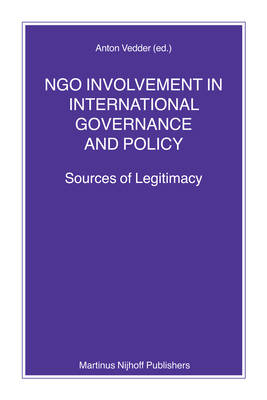
NGO Involvement in International Governance and Policy
€ 200,45
+ 400 punten
Omschrijving
Internationally operating nongovernmental organisations, NGOs, are increasingly involved in international politics and policy making. In many respects their involvement resembles activities and policies that, until recently, were typical of traditional national authorities. This book is about the reasons for which NGOs can and the reasons for which NGOs cannot be considered as rightful participants in international governance. It tries to deliver rationally defensible starting points for the discussion and the assessment of claims for the legitimacy of their organizations and activities. The book focuses on the question: What conditions must ideally be met for an organization to be called truthfully legitimate, be it or be it not as a matter of fact perceived as legitimate by the public? This does not mean that empirically descriptive questions are left aside. Practical feasibility is important even to a thoroughly normative conception of legitimacy. For that reason and for heuristic purposes, large parts of this book are dedicated to the ways in which NGOs and stakeholders perceive NGO legitimacy.
Specificaties
Betrokkenen
- Uitgeverij:
Inhoud
- Aantal bladzijden:
- 248
- Taal:
- Engels
- Reeks:
- Reeksnummer:
- nr. 72
Eigenschappen
- Productcode (EAN):
- 9789004158467
- Verschijningsdatum:
- 1/11/2007
- Uitvoering:
- Paperback
- Formaat:
- Trade paperback (VS)
- Afmetingen:
- 160 mm x 239 mm
- Gewicht:
- 408 g

Alleen bij Standaard Boekhandel
+ 400 punten op je klantenkaart van Standaard Boekhandel
SOLDEN


Beoordelingen
We publiceren alleen reviews die voldoen aan de voorwaarden voor reviews. Bekijk onze voorwaarden voor reviews.