



Je cadeautjes zeker op tijd in huis hebben voor de feestdagen? Kom langs in onze winkels en vind het perfecte geschenk!
- Afhalen na 1 uur in een winkel met voorraad
- Gratis thuislevering in België vanaf € 30
- Ruim aanbod met 7 miljoen producten
Je cadeautjes zeker op tijd in huis hebben voor de feestdagen? Kom langs in onze winkels en vind het perfecte geschenk!
- Afhalen na 1 uur in een winkel met voorraad
- Gratis thuislevering in België vanaf € 30
- Ruim aanbod met 7 miljoen producten





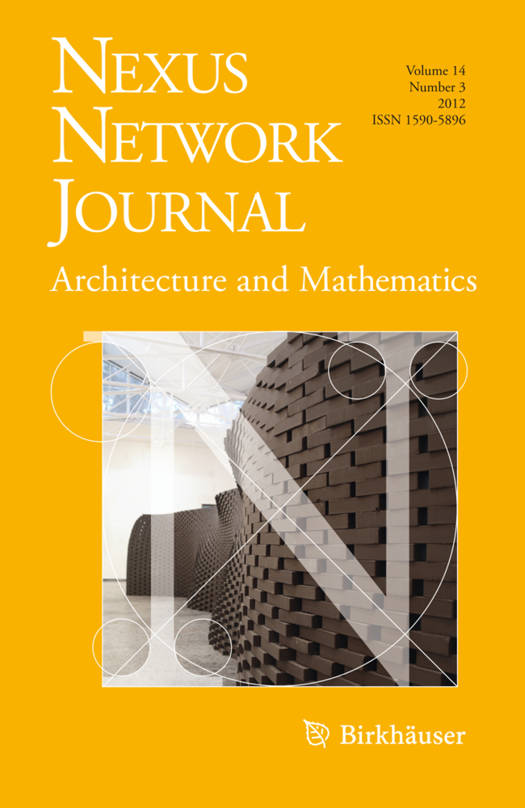
Nexus Network Journal 14,3
Architecture and Mathematics
€ 83,95
+ 167 punten
Omschrijving
The Winter 2012 (vol. 14 no. 3) issue of the Nexus Network Journal features seven original papers dedicated to the theme "Digital Fabrication". Digital fabrication is changing architecture in fundamental ways in every phase, from concept to artifact. Projects growing out of research in digital fabrication are dependent on software that is entirely surface-oriented in its underlying mathematics. Decisions made during design, prototyping, fabrication and assembly rely on codes, scripts, parameters, operating systems and software, creating the need for teams with multidisciplinary expertise and different skills, from IT to architecture, design, material engineering, and mathematics, among others The papers grew out of a Lisbon symposium hosted by the ISCTE-Instituto Universitario de Lisboa entitled "Digital Fabrication - A State of the Art". The issue is completed with four other research papers which address different mathematical instruments applied to architecture, including geometric tracing systems, proportional systems, descriptive geometry and correspondence analysis. The issue concludes with a book review.
Specificaties
Betrokkenen
- Uitgeverij:
Inhoud
- Aantal bladzijden:
- 177
- Taal:
- Engels
- Reeks:
- Reeksnummer:
- nr. 14
Eigenschappen
- Productcode (EAN):
- 9783034805810
- Verschijningsdatum:
- 26/03/2013
- Uitvoering:
- Paperback
- Formaat:
- Trade paperback (VS)
- Afmetingen:
- 156 mm x 234 mm
- Gewicht:
- 267 g

Alleen bij Standaard Boekhandel
+ 167 punten op je klantenkaart van Standaard Boekhandel
CADEAU


Beoordelingen
We publiceren alleen reviews die voldoen aan de voorwaarden voor reviews. Bekijk onze voorwaarden voor reviews.